
Your Best Shot at Next Year's Propane School Bus Contract Is This Fall
Is Your Fleet Missing the School Bus RFP Window?
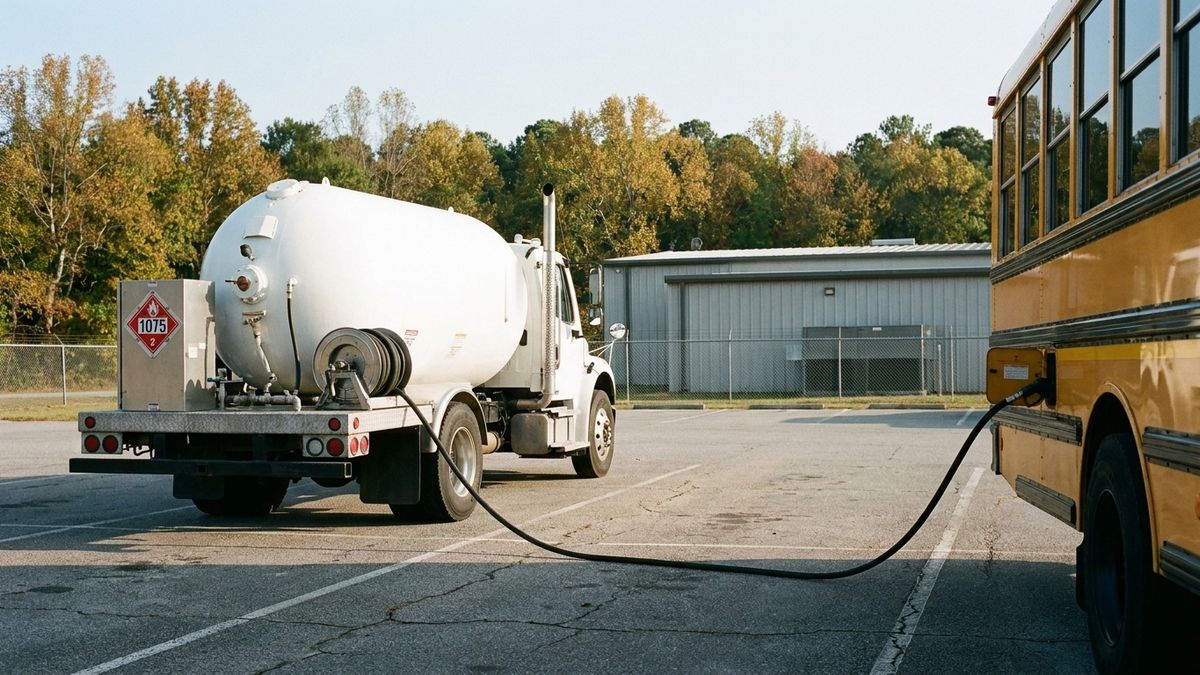
School bus and municipal fleet purchasing runs on a budget cycle that starts in fall and locks by spring. Propane operators chasing autogas conversions need to be in front of transportation directors now — not next August, when routes are already assigned.
The Situation
School buses are back on the road this month. The propane-powered ones running today's routes were locked in months ago — funded, board-approved, and ordered well before spring recess. Districts and municipal fleets build next year's vehicle budget this fall and finalize it by a spring board vote. By Labor Day, every decision behind that bus is a year old.
The Facts
The RFP Calendar Runs Backward From What You Think — Most school transportation departments build next year's vehicle and fuel budget between September and January, present it to the school board by winter or early spring, and lock purchase orders before the school year ends. Blue Bird, the country's largest school bus manufacturer, has built propane-powered buses using Roush CleanTech's autogas engine system for more than a decade, and that supply chain runs on the same lead time as diesel: order in fall, deliver by late summer. First conversation with a district's transportation director in July? You are pitching for two years out.
The Refueling-Time Argument Still Wins — Turnaround time between routes is the metric transportation directors care about most, and autogas beats battery-electric on it. A propane bus refuels in minutes at a bulk dispenser. A battery-electric bus needs hours on a charger, and that charger often requires a utility service upgrade before it can even be installed — the kind of capital project that can hold a district's timeline for a full budget cycle or more. The EPA's Clean School Bus Program, funded through the 2021 infrastructure law, has awarded funding to propane and CNG buses alongside electric ones since the program launched in 2022. Federal clean-fleet dollars have gone to propane.
Business Impact
Missing the fall planning window costs a full purchasing cycle. A district that has not heard from you before its winter budget presentation goes with the fuel option its consultant already modeled, and nothing reopens until next year's budget build starts.
What this means for your business: 1) Districts and municipal fleets finalize fuel and vehicle decisions on a fall-to-spring timeline, so outreach that starts in summer is already a year behind. 2) One district contract creates a fueling account that runs close to year-round, smoothing out the seasonal swings of a residential-heavy delivery book. 3) Every autogas account is also a hedge against electrification mandates aimed at municipal fleets, since a signed multi-year fueling contract is harder to unwind than a decision nobody has made yet. 4) Lose the cycle and a competitor — or an EV charging vendor — gets the first meeting with the largest single fuel buyer in your territory.
Key Data Points
- Blue Bird has built propane-powered school buses using Roush CleanTech's autogas engine system for more than a decade.
- The EPA's Clean School Bus Program, funded under the 2021 infrastructure law, has awarded funding to propane buses since its 2022 launch.
- Most school transportation departments build next year's vehicle and fuel budget between September and January, ahead of a board vote.
- A propane bus refuels in minutes at a bulk dispenser; a battery-electric bus needs hours on a charger plus, often, a utility upgrade.
Key Takeaways
- School and municipal fleet fuel decisions get finalized on a fall-to-spring budget cycle, so an ops manager pitching autogas in July is already a year late.
- Propane buses refuel in minutes at a bulk dispenser, while battery-electric buses need hours on a charger and often a utility service upgrade first.
- The EPA Clean School Bus Program has funded propane and CNG buses alongside electric ones since its 2022 launch — federal clean-fleet money has gone to propane.
- One district or municipal autogas contract creates a fueling account that runs nearly year-round, offsetting the seasonal swings of a residential delivery book.
Action Steps
- 1.Call your three biggest district and municipal fleet prospects in the next 30 days and ask when their transportation department starts building next year's fuel budget.
- 2.Check whether your on-site autogas dispenser has spare capacity for a fleet account before winter residential deliveries take over the schedule.
- 3.Build a one-page comparison of refueling turnaround and charger-infrastructure cost, autogas against battery-electric, and hand it to whoever walks into the district meeting.
- 4.Block the 5 months from September through January on your own calendar as fleet-outreach season, and mark every district in the territory nobody has called yet.
Competitive Advantage
Ops managers who show up at a district's budget meeting in the fall, not the spring, get to help write the fuel spec instead of responding to one already written for someone else. That is what separates a multi-year fueling contract from a bid submitted after the decision was made.
Has your team already reached out to this year's top school bus or municipal fleet prospects, or are you waiting for their RFP to land in your inbox?
Get the next one in your inbox.
Free propane industry news, twice a week. 30,000+ operators already read it.
No spam, unsubscribe anytime. We'll email you a link to confirm — that's how we keep the list real. Cloudflare processes a short bot-check token on this form. See our privacy policy.
Published by PropaneInsider.com
AI-powered propane industry news for 30,000+ professionals
Propane Insider is published by the makers of Tank Spotter, Custom Fuel App, Blink Fuel, PIMS and Propane Safety Pro; some links go to advertisers.