
The Resort Stop: Why Hospitality Accounts Ask More of a Driver Than Any Other Stop on the Route
The Resort Stop: Why Hospitality Accounts Ask More of a Driver Than Any Other Stop on the Route
The Facts
Late July put a run of American propane incidents on local news desks in three days. In late July, a house in Bridgton, Maine was destroyed by a propane leak explosion. On July 24, a Maine propane fire hurt several people, one of them a firefighter. The same day, responders in Pike County stopped a propane leak with no injuries reported. On July 25, a propane tank explosion in Antioch, California sent people to the hospital.
A house. A fire scene with responders in it. A roadside. A residential tank.
None of them a resort. But the account type US marketers think least about is the one that puts all four of those settings on a single property. Golf clubs. Lodges. Banquet centers. Campgrounds. Waterfront restaurants with a patio. That setting made news the same week, when a fatal propane explosion at a golf resort in Ontario, Canada was reported with no cause disclosed and no link to a delivery. Take one thing from it: the address type. That part travels.
What a hospitality account really is
On a route sheet, a golf club is one line. On the ground it is a sprawl. Commercial propane covers hospitality right alongside restaurants, schools, and forklift fleets. Hotels. Banquet centers. Conference halls. And the outdoor businesses that keep guests outside after dark.
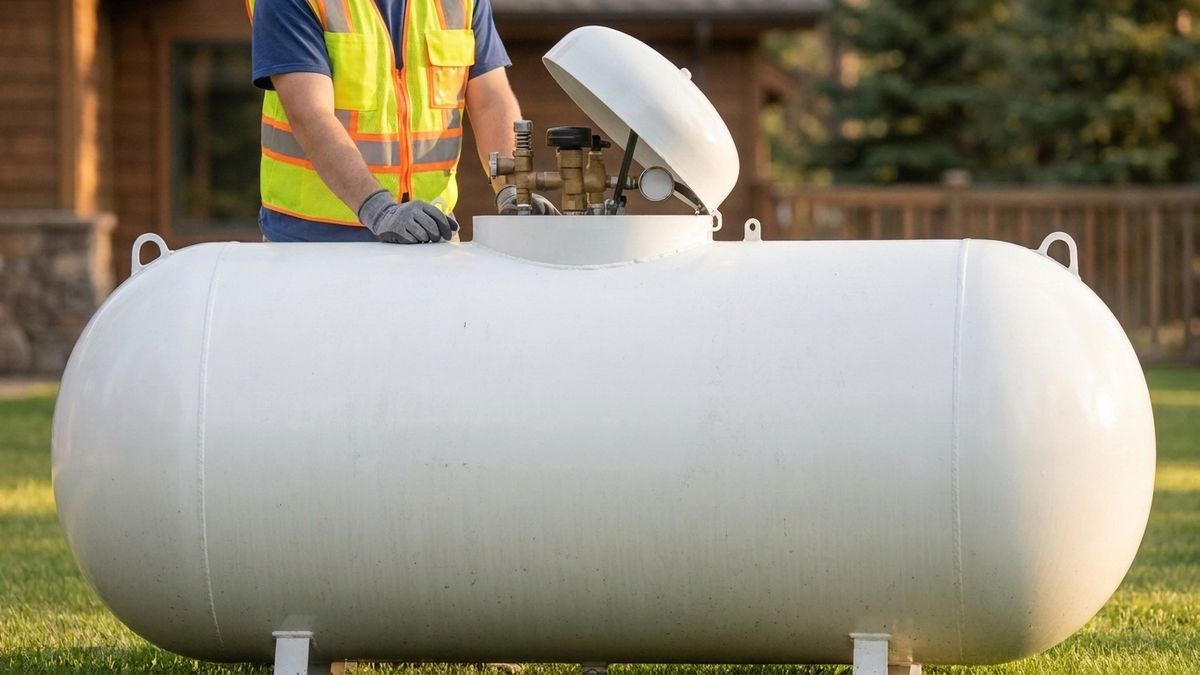
The gear list runs long. Cooking lines, dryers, tankless water heaters, generators, fire pits, patio heaters, pool and spa heaters. One account can carry all of it. Add a shed full of portable units that sit on the patio most of the year. Tank size climbs to match — these are bulk-storage properties, not house setups.
So does the pressure to stay running. A club kitchen that loses fuel on a Saturday in October has a full book and a wedding party waiting on it.
The gear moves, and not by your people
The hard part of an amenity account sits downstream of the tank.
Portable heaters get dragged to wherever the event is. Fire features get relit by whoever is closest. A banquet manager buys more patio units in September because the forecast turned. Seasonal staff turn over between spring and late fall. The person shown how to shut a valve in April is working somewhere else by Halloween.
None of those people work for the propane company. They still handle propane gear every week. And the tank out back has your name on it.
Where a driver's job ends
It ends early, and it should. Outside the familiar grill-bottle swap, regulator work belongs to licensed technicians. Regulators get replaced, not repaired, on the service life the maker sets. One that has been underwater comes out no matter how new it looks.
A driver who finds a regulator sitting in a puddle behind a pool house does not reach for a wrench. He writes it up. Location, date, and enough detail that dispatch can book the visit instead of filing the paper. Same for a heater stored with its cylinder still hooked up. A scorched hose. A fire feature somebody plumbed himself over the winter.
If he smells gas instead, the steps do not change because the address is fancy. Get everyone out of the area. Call 911 from a safe distance. Then call the propane dealer. Kitchen staff and banquet crews rarely know that order, and they are the ones who will be standing there.
Most operators who miss these problems have fine training material. What they lack is a path from the note a driver writes at 2 p.m. to a name on Thursday's schedule.
The one that worked
Pike County is the incident in the group that ended right. A leak, a response, a shutoff, no injuries reported. It got a short local story and no follow-up. That is what a good outcome looks like in this business — brief, dull, and missing from anyone's insurance file.
Nobody replays that one at a safety meeting. It is also the only kind of ending a driver's write-up can produce. That is why the walk-around earns its minutes, even when the paper it generates goes nowhere.
Fall is amenity season
By late September the patio heaters come back out. Pool heaters run longer against cold nights. Hospitality loads climb just as routes tighten, and the push to make the next stop starts shaping how long a driver lingers at this one. Every US operator with club, resort, or banquet accounts is about to ask drivers to move faster through the sites where slowing down pays.
The Bridgton house and the Antioch tank were somebody's ordinary Thursday until they weren't. So is the next patio heater a seasonal hire drags out of a shed in October.
Walk your hospitality accounts this week
Pull the list of club, resort, campground, and banquet accounts on your books. Send a driver or tech to each one with three questions. Which amenity equipment on this property did we not install? Who on site can find the shutoff today, by name? When did a trained set of eyes last walk the whole property, and where is that note now?
Business Impact
Hospitality and amenity accounts pile up three things at once: heavy commercial load, the public standing next to it, and gear that seasonal staff move and reconnect with no propane training. That leaves the delivery driver as the only trained person who shows up on a schedule. Operators who capture what drivers see turn a routine fill into a service ticket. Operators who don't carry the same risk with none of the visibility, and pay for it in emergency runs, callbacks, and claims history.
Action Steps
- 1.Pull your list of club, resort, campground, and banquet accounts this week.
- 2.Ask each site manager, by name, who can find the propane shutoff today.
- 3.Check when a trained set of eyes last walked each property, and write down where that note lives.
When one of your drivers flags something wrong on a customer's patio or pool house, how many hours pass before a service tech has it assigned?
Get the next one in your inbox.
Free propane industry news, twice a week. 30,000+ operators already read it.
No spam, unsubscribe anytime. We'll email you a link to confirm — that's how we keep the list real. Cloudflare processes a short bot-check token on this form. See our privacy policy.
Published by PropaneInsider.com
AI-powered propane industry news for 30,000+ professionals
Propane Insider is published by the makers of Tank Spotter, Custom Fuel App, Blink Fuel, PIMS and Propane Safety Pro; some links go to advertisers.