
A New Tank's K-Factor May Need a Delivery to Recalculate
Check what starts a new tank's K-Factor update
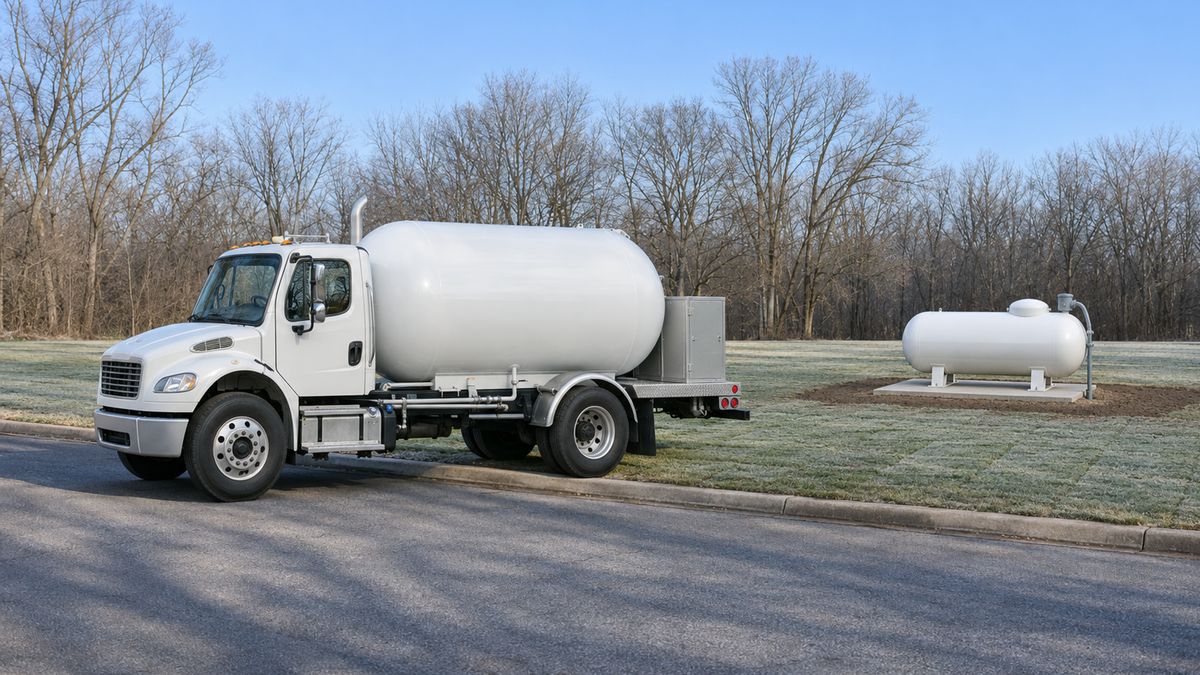
A percentage reading may not trigger a new tank's first K-Factor recalculation. Check how your delivery software handles that step before relying on its depletion estimate.
The Situation
If your dispatch team uses delivery software to estimate tank levels, review new autofill accounts before winter routes get busy. A tank reporting percentages may still be using a setup estimate rather than a K-Factor tested against deliveries.
The technical documentation behind this example requires a delivery of gallons before the first recalculation; a percentage update alone will not start it. That is a documented behavior in one system, not a rule established for every product. Check your own software's instructions and settings before assuming it works the same way.
The Facts
K-Factor measures the degree days needed to use 1 gallon of fuel. House size and insulation affect it. Daily-use entries account for appliances such as water heaters and clothes dryers, whose demand is separate from space heating.
In the documented example, setup and recalculation are separate events. A new tank's initial factor is calculated at the next posted degree day or when its level reaches 20%. Later recalculation uses a percentage-change threshold and the last 2 deliveries. These are example-specific settings and triggers; verify the equivalents in your own system.
The example also combines the K-Factor with a daily-use allowance to estimate the remaining tank percentage. An appliance entry that was never checked at setup deserves a review alongside delivery history. The source does not establish the default recalculation threshold for your accounts or show that every software product follows this sequence.
Business Impact
A delivery estimate helps dispatch decide which accounts need attention on the next route. If a new tank's setup values have not yet been checked against actual deliveries, the estimate needs that context.
Our advice: have dispatch check the delivery record before treating a percentage update as evidence that a K-Factor recalculated. For systems that require delivered gallons to start that process, follow the account through its first delivery and confirm what changed. The documentation describes a calculation trigger, not a guarantee against run-outs.
Key Data Points
- 1 gallon: the consumption unit in the source's K-Factor definition.
- 20%: an initial-setup trigger in the documented example; not a universal software setting.
- 2 deliveries: the history used by that example's later recalculation, alongside its configured percentage-change threshold.
Key Takeaways
- A tank-level update and a recalculated K-Factor can be separate events.
- Confirm your software's own triggers, account types and saved settings rather than copying another system's controls.
Action Steps
- 1.Review new autofill accounts with no recorded delivery. Note whether their current factors are still setup estimates.
- 2.Check the appliance-use entries for those accounts, including water heaters and clothes dryers, against the information collected at setup.
- 3.Ask your system administrator which event starts the first recalculation and which threshold controls later changes. For accounts awaiting a delivery-triggered update, confirm the result after that delivery.
Before adding a new account to a winter route, can your dispatcher tell whether its K-Factor reflects deliveries or only its setup estimate?
Get the next one in your inbox.
Free propane industry news, twice a week. 30,000+ operators already read it.
No spam, unsubscribe anytime. We'll email you a link to confirm — that's how we keep the list real. Cloudflare processes a short bot-check token on this form. See our privacy policy.
Published by PropaneInsider.com
AI-powered propane industry news for 30,000+ professionals
Propane Insider is published by the makers of Tank Spotter, Custom Fuel App, Blink Fuel, PIMS and Propane Safety Pro; some links go to advertisers.