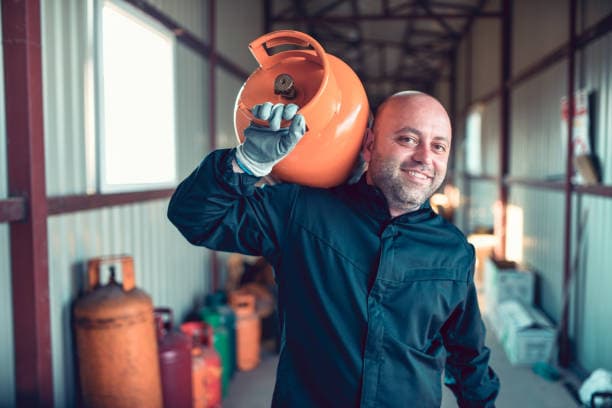
What it takes to start a propane delivery business: the license, the truck, DOT rules, supply, insurance, first customers and the software to run it.
Updated September 24, 2026
The short answer: To start a propane business, you need a state LP-gas license where your state requires one, a propane supply contract, a bobtail truck, drivers with a CDL carrying hazmat and tank endorsements, federal hazmat registration, a written DOT security plan, insurance and trained employees. Then you need customers who can find you and order.
The first gallon a new propane company sells is the easy part. The license, the truck, the supply deal and the insurance all come first. Most of the money goes out the door before the first customer calls.
Here are the steps in the order most new dealers run into them.
Step 1: Decide whether to start new or buy in
There are two ways into this business. You can build a company from nothing, or you can buy one that already runs.
Buying gets you customers, tanks already set, and drivers who know the back roads. It also gets you every shortcut the last owner took. Before you sign, read the safety records, the tank files and the training records. If they are thin or missing, price that into the deal.
Starting new means you choose every piece yourself. You also start with no customers. Many homeowners lease their tank from the company that fills it, and they tend to stay put. A new dealer's first accounts often come from new construction, farms, local businesses and people who are unhappy where they are.
Step 2: Pick your area before you pick your truck
Propane is a local business. Every mile the bobtail drives costs you fuel and time, and nobody pays you for the empty miles.
Draw a tight circle around where your truck will load. Inside it, find out who heats with propane, who already delivers there, and what the farms and businesses buy. Home heating customers buy most of their gas in the cold months. Farm and commercial work can carry the rest of the year: grain drying in the fall, heat on job sites, forklifts in warehouses, cooking in restaurants.
A mix of both gives a new dealer a steadier year.
Step 3: Get licensed and get your people trained
Propane licensing is a state job, and no two states run it the same way. In Texas, the Railroad Commission's Alternative Fuels department handles LP-gas licensing, training and exams. Other states use a fire marshal, a safety bureau or an LP-gas board. Call your state first. Its answer sets the pace for everything else.
Your crew needs training before they touch a tank. For years the industry standard was the Certified Employee Training Program, or CETP. The Propane Education & Research Council has moved it to the PERC Education Program, or PEP, which breaks the material into shorter lessons built around each job. Some state laws still name CETP. Check what yours says with our free CETP and PEP state lookup.
Keep the records. The online transcript is half of it. The sign-off sheets from hands-on training are the other half, and they are the part that goes missing.
Step 4: The truck, the driver and the DOT paperwork
A bobtail is a hazmat truck. Federal rules apply the day it rolls.
- The truck. Buy from a builder who knows propane and can service what it sells. Lux Industries, one of our advertisers, builds and services propane bobtails.
- The driver. A placarded propane truck needs a driver with a commercial driver's license carrying hazmat and tank endorsements. First-time hazmat drivers must finish entry-level training with a registered provider before they test.
- Registration. A company that hauls placarded hazmat must register with the Pipeline and Hazardous Materials Safety Administration (PHMSA) and pay the registration fee.
- A written security plan. Anyone who ships or hauls more than 792 gallons (3,000 liters) of a flammable gas like propane in a single tank must have one (49 CFR 172.800(b)(3)). A bobtail's tank holds far more than 792 gallons. If you run one, the rule covers you.
The plan has to be in writing. It must cover who you hire, who can get to your trucks and your gas, and how loads stay safe on the road. It has to be reviewed at least once a year (49 CFR 172.802). Propane Safety Pro writes DOT hazmat security plans for propane companies, fitted to your yard, your trucks and your routes.
Step 5: Line up supply and storage
You need a place to buy propane and a place to keep it. New dealers sign a supply contract with a wholesale supplier. Then they load at the supplier's terminal or take deliveries into their own bulk plant.
A bulk plant gives you more control over price and timing. It also brings permits, inspections and a plan review by the local fire official. Talk to that office before you buy land.
Then come customer tanks. Every tank you own and set is money spent up front, and it is also the customer relationship you keep.
Step 6: Get insured, and write down how you work
Carriers insure propane companies that can show how they work safely. No single federal rule orders every dealer to keep a policies and procedures manual. Your insurer, your local fire official and, after an accident, a plaintiff's lawyer will still ask for one.
A manual that matches how your drivers actually run answers all three. Propane Safety Pro builds a written policies and procedures manual for your operation from one intake form. It does not run classes. It connects dealers with training partners and writes the manuals that document the training.
Step 7: Pick software for the field and the front door
A new company can't run on paper tickets and a phone that rings all night. Two jobs matter on day one. The driver's work at the tank has to be written down, and customers need a way to order without calling.
If you are starting from scratch, Blink Fuel sets up the whole business in one package: your website, your own branded ordering app, the Tank Spotter driver app and the back office. It works for propane and any other fuel you add later. Setup is $11,000, then $1,100 a month. The website is usually live in about a week, with the app and back office a couple of weeks after.
If you already run a billing or back-office system, Tank Spotter works alongside it on your crew's phones. It covers dispatch, service work, tank inspections, a training library and safety records, on Apple or Android, with or without a cell signal. Setup is $6,000, then $600 a month.
Step 8: Get your first customers
People find a propane company the way they find a plumber. They search Google, check the map, read the reviews, and more and more they ask an AI assistant. A new company has to show up in all of those places, inside the area it actually serves.
That is the job PIMS does for propane companies. It runs your website, Google Business Profile, reviews, email and AI search for you, inside your own service area.
Then answer every call and every web order fast. Your first heating season will tell you whether the plan works. Start with the phone call to your state, because every other step waits on its answer.
Questions people ask
How much does it cost to start a propane business?
There is no single number. The biggest costs are the bobtail truck, bulk storage, customer tanks and your first supply of propane. Licensing, insurance, training and software come after those. Software is the small line: Blink Fuel, for example, is $11,000 to set up and $1,100 a month. Get quotes on the truck and storage first, since they set the size of your loan.
Do I need a license to sell propane?
Usually, yes. Each state sets its own propane licensing rules, and the agency differs. Texas uses its Railroad Commission. Other states use a fire marshal, a safety bureau or an LP-gas board. Call your state agency before you buy a truck or land.
What license do propane delivery drivers need?
A commercial driver's license with hazmat (H) and tank (N) endorsements, because a bobtail is a placarded hazmat tank truck. First-time hazmat drivers must finish entry-level driver training with a registered provider. Your company must also give them DOT hazmat employee training (49 CFR 172.704). PERC's PEP program covers the propane-specific skills.
Does a propane company need a DOT security plan?
Yes, if you run a bobtail. Federal rules require a written hazmat security plan for anyone who ships or hauls more than 792 gallons (3,000 liters) of propane in a single tank, under 49 CFR 172.800(b)(3). Bobtails and transports both hold more than that.
How often does a hazmat security plan have to be reviewed?
At least once a year, and updated whenever your operation changes, under 49 CFR 172.802(c). Employees who carry out the plan must be told when it changes.
Is it better to buy a propane company or start one?
Buying gets you customers, tanks and trained drivers on day one, plus whatever problems the last owner left behind. Starting new takes longer to build a customer base, but you set up every piece your way. Read the seller's safety, tank and training records before you buy.
Where does a new propane dealer buy propane?
From a wholesale supplier, under a supply contract. You load at the supplier's terminal or take deliveries into your own bulk plant. Ask about contract length, pricing terms and how your supply holds up in a cold snap.
What software does a small propane company need?
At the least, a way to document work at the tank and a way for customers to order without calling. Starting from scratch, Blink Fuel covers the website, ordering app and driver app in one package. With an office system already in place, Tank Spotter runs alongside it on your crew's phones.
How do new propane companies get customers?
Show up where people look: Google search, the map, reviews, your website and AI assistants, all inside the area you serve. Builders, farms and local businesses are worth a visit in person. Answer every call and web order fast.
Tools for a new propane company
Propane Insider is published by the makers of Tank Spotter, Custom Fuel App, Blink Fuel, PIMS and Propane Safety Pro. Some links in this article go to those products or to our advertisers. This article is general information, not legal advice. Check current rules with your state agency and the U.S. Department of Transportation before you act.