
Electric Rates Rose. The Customer’s Bill Still Comes First.
Electric rates rose. Give the front desk context.
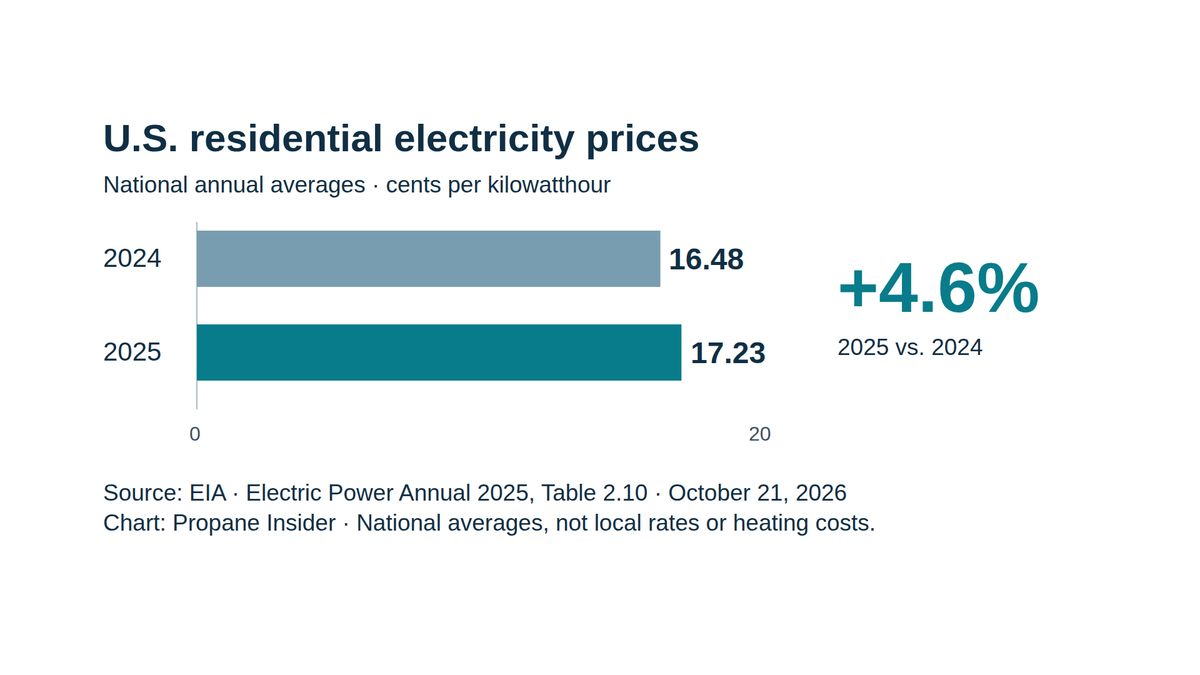
Final federal data show a higher national residential electricity average last year. Propane retailers can use the report to open a careful cost discussion, then turn to the customer’s utility bill and equipment.
The Situation
The National Propane Gas Association reported October 22, 2026, that the average U.S. residential electricity price rose 4.6% between 2024 and 2025, citing newly finalized federal data.
For a retailer answering questions about heat pumps or an all-electric build, the report is useful preparation. The front desk needs a sound answer before the conversation turns into a claim about which heating system costs less.
The Facts
The U.S. Energy Information Administration (EIA) lists the residential average at 17.23 cents per kilowatthour in 2025, up from 16.48 cents in 2024. Its Electric Power Annual table marks the values as final. The figures describe electricity sold to residential customers across the country; they do not describe the cost of heating a particular home.
The state rows also resist a single sales pitch. EIA’s table shows Hawaii’s residential average fell from 42.86 to 40.40 cents per kilowatthour, even as the national figure rose. A national increase can coexist with a local decline.
A June literature review published by Columbia University’s Center on Global Energy Policy adds context. The authors describe several regional pressures on electric prices, including grid investment, weather-related recovery costs and fuel volatility. They caution against explaining the change through demand growth alone. Give that local context to the customer, too. A national headline cannot explain every charge on a utility bill.
Business Impact
A loose comparison can leave a customer with a promise the sales department cannot defend. The annual national average supplies no home-specific heat-pump performance, installation quote or propane consumption estimate. It therefore establishes no universal savings for either fuel.
Ask the homeowner to bring the current utility bill and the proposed equipment details to a qualified contractor. Keep the price of energy separate from the amount of energy the home and system will use. Where a comparison depends on an assumption, label it. The unanswered question is what that particular home will cost to heat under the options being considered.
Key Data Points
- If a commercial-account customer raises the cost question, use the commercial row separately. The final EIA table puts that 2025 average at 13.37 cents per kilowatthour, up from 12.75 the prior year.
Key Takeaways
- Use the national result as context when answering electricity-cost questions.
- Base any household comparison on local bills and a documented assessment of the proposed equipment.
Action Steps
- 1.Give CSRs the final annual table and highlight the state row for each office’s service area.
- 2.Review the website’s heating-cost language. Replace blanket savings claims with a clear description of the inputs a customer needs.
- 3.Have the sales manager review a sample fuel-cost comparison with staff. Label each assumption and list the customer bill and equipment details still needed before presenting an estimate.
Competitive Advantage
A retailer can earn trust by being precise at the first call. Put the source date on the CSR reference sheet and record who can handle detailed equipment questions, including an outside resource when needed. The next caller who asks about heat pumps should reach a CSR with the local rate sheet in hand.
The next heat-pump caller puts the CSR at a choice: request the utility bill and equipment details before estimating, or make a claim the available numbers cannot support.
Get the next one in your inbox.
Free propane industry news, twice a week. 30,000+ operators already read it.
No spam, unsubscribe anytime. We'll email you a link to confirm — that's how we keep the list real. Cloudflare processes a short bot-check token on this form. See our privacy policy.
Published by PropaneInsider.com
AI-powered propane industry news for 30,000+ professionals
Propane Insider is published by the makers of Tank Spotter, Custom Fuel App, Blink Fuel, PIMS and Propane Safety Pro; some links go to advertisers.