
Vermont’s Heating Map Starts With Homes, Then Routes
Vermont’s heating map needs a route-level read
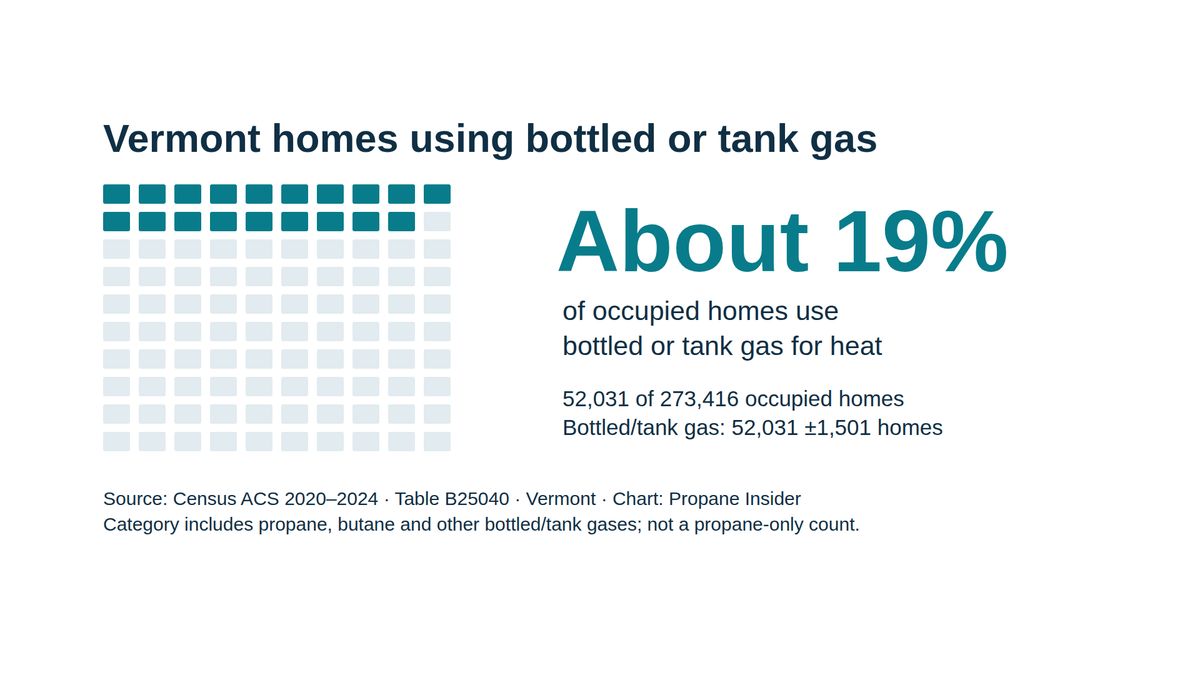
A new NPGA spotlight draws attention to Vermont’s large delivered-fuel heating market. Retailers should pair the survey’s period and fuel definitions with their own service map before choosing where to seek new business.
The Situation
The National Propane Gas Association’s October 22 spotlight gives Vermont propane retailers a fresh reason to revisit the county map before winter sales work. Its heating-market tool offers members detail down to counties and ZIP codes.
Start close to the bulk plant. A county with a large oil-heated housing stock may deserve a closer look, but county boundaries cannot tell a dispatcher whether a new account fits an existing route.
The Facts
NPGA reports 52,031 Vermont households using propane as their primary heating fuel and a 19% statewide share. The association identifies Lamoille as the county with the highest propane share. Access to the full tool runs through the member dashboard.
The U.S. Census Bureau’s 2020–2024 American Community Survey five-year estimates put the state’s occupied housing total at 273,416. The Census category covers bottled or tank gas, including propane and butane. Its count matches the association’s propane headline. This is an estimate of the main house-heating fuel, not a count of every propane account or appliance.
The Census table estimates 105,161 occupied Vermont homes in the fuel-oil-and-kerosene category for the same period. In Lamoille, the estimates are 4,898 fuel-oil-and-kerosene homes and 4,197 bottled-or-tank-gas homes. These county figures also have their own sampling margins of error; they are not precise account totals. Treat the apparent gap cautiously. Oil remains part of the local conversation even where propane is well established.
Business Impact
Use the fuel mix to choose where to investigate, then test the choice against actual delivery coverage. A housing estimate supplies no equipment age, homeowner intent or cost to serve. Calling every oil-heated home a conversion prospect would overstate what the survey can support.
A useful next pass pairs an existing route with nearby communities. Then weigh the retailer’s service capacity and the kinds of work its technicians can accept. Discuss any proposed fuel change with the homeowner and qualified installers. The data do not establish how many households want to switch, what they would spend or whether an installation would pay back.
Key Data Points
- The Census estimate for Vermont’s bottled-or-tank-gas category has a margin of error of plus or minus 1,501 homes. Treat the count as a range before setting a statewide outreach target.
- The survey only counts occupied homes; a seasonal property outside that count should not be added to a sales forecast from this table.
Key Takeaways
- Keep the survey period and fuel-category definition beside the count when sharing the map.
- Treat a county fuel mix as a lead for market research, then check each community against the service area.
Action Steps
- 1.Have the general manager choose a county already served by the office and compare its heating mix with the current route map.
- 2.Ask the sales manager to record which nearby communities can be served before any new-account outreach is scheduled.
- 3.Have the service manager check installation capacity before setting a campaign launch date.
Competitive Advantage
The Energy Information Administration’s Vermont profile helps explain why the statewide mix needs a local reading. Natural gas service is concentrated in the Greater Burlington area. A sales map drawn around the state average would miss that difference.
Concentrating outreach where delivery and service already fit gives the sales department a more useful brief than a statewide household total. Put dispatch in that discussion early. A promising address still has to work on a winter delivery day.
Before approving new-account outreach, which addresses sit on routes your trucks already serve?
Get the next one in your inbox.
Free propane industry news, twice a week. 30,000+ operators already read it.
No spam, unsubscribe anytime. We'll email you a link to confirm — that's how we keep the list real. Cloudflare processes a short bot-check token on this form. See our privacy policy.
Published by PropaneInsider.com
AI-powered propane industry news for 30,000+ professionals
Propane Insider is published by the makers of Tank Spotter, Custom Fuel App, Blink Fuel, PIMS and Propane Safety Pro; some links go to advertisers.