
Virginia and Kansas Propane Laws Protect Only Tanks Marked With the Owner's Name
Is Your Propane Tank Legally Marked Before Winter Fills?
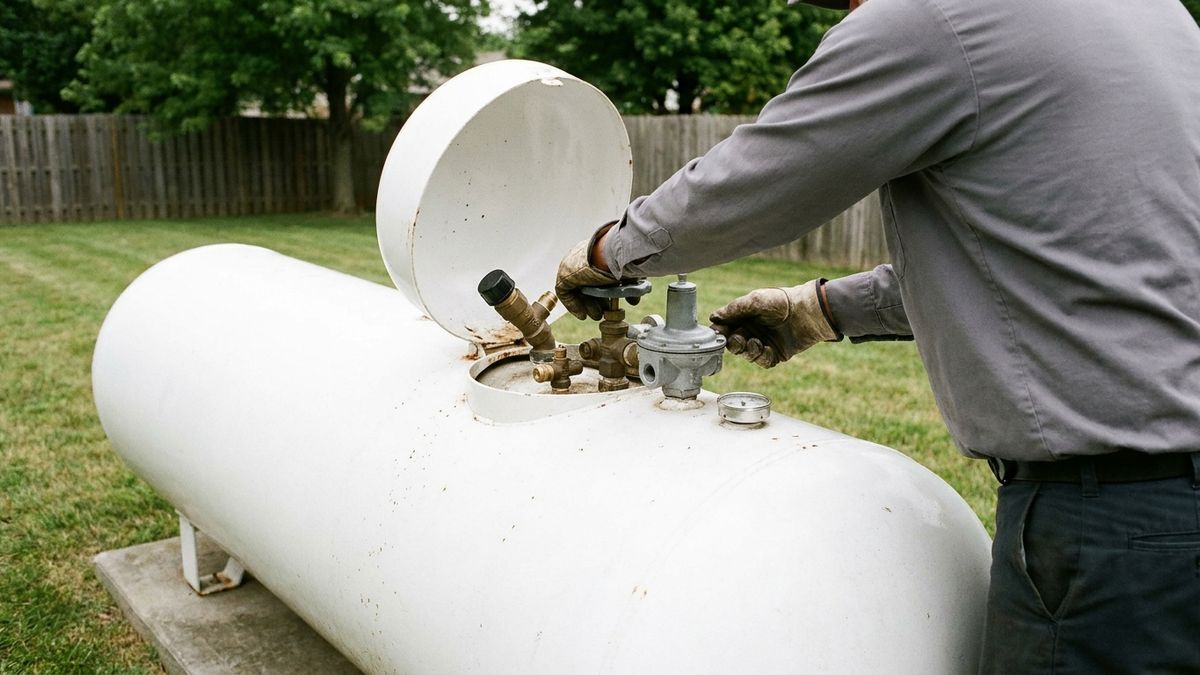
Before winter, check the stencil on every company-owned tank.
The Situation
A company tank whose stenciled name has worn away may have lost the legal protection that keeps a competitor from filling it. In Virginia and Kansas, filling a propane tank you don't own is against the law, but the statutes protect tanks that carry the owner's name or mark in legible form.
This article summarizes the statute text; dealers should confirm the current wording with counsel before relying on it.
The Facts
Under Code of Virginia § 18.2-494, only a container's owner — or someone the owner has authorized in writing — may fill, refill, buy, sell, trade, loan, or otherwise deal in a propane container. The protection applies as long as that vessel bears the owner's name, initials, mark, or other device in plainly legible characters on its surface. The same section bars anyone but the owner from defacing, erasing, covering up, or otherwise concealing that identifier.
Virginia carves out one narrow exception. During a declared emergency, a residential customer with less than a 24-hour supply may turn to an emergency supplier if the tank's owner can't make a scheduled delivery or fill the request within 24 hours. That emergency supplier must inspect and certify the container and its pipelines, then notify the owner in writing within five business days — including the customer's name and address, the delivery date, and the gallons delivered. The supplier may not charge more than the owner's normal fees.
Kansas Statutes § 55-1102 tracks the same structure: if a tank legibly displays the owner's name, mark, initials, or other identifying device, only the owner or a written designee may fill it, trade it, or alter that designation. It's separately unlawful for anyone to place another party's label on a tank that isn't theirs. The statute carves out one exception of its own: a manufacturer or supplier may still stamp its own name and the safety markings required by code or federal regulation onto a vessel it built or supplied.
Neither statute spells out what counts as sufficient proof of ownership beyond the identifier itself — no bill-of-sale requirement, no records format, no serial-number mandate appears in either code section. Whether other states carry comparable marking-protection language is not addressed by these sources. And how 'plainly legible' gets judged in practice, once weather or years of handling have worn a stencil down, remains unclear.
Business Impact
Heading into winter, the mark on each company-owned tank does legal work in these two states, so a worn, painted-over or missing label is a gap worth closing. Repainting a vessel without re-stenciling the mark can remove the protection by accident.
In Virginia, an emergency supplier who fills your customer's tank must send you written notice within five business days, so dispatch should expect that paperwork. Because neither statute defines proof of ownership beyond the mark, keep your own records ready if a mark is ever challenged.
Key Data Points
- Code of Virginia § 18.2-494 and Kansas Statutes § 55-1102 both criminalize unauthorized filling of marked propane containers.
- Virginia's emergency-supplier provision applies only when a residential customer has less than a 24-hour supply and you can't deliver within 24 hours.
- A manufacturer or supplier may still stamp its own required safety markings on a vessel under Kansas § 55-1102(c), even though it isn't the container's owner.
Key Takeaways
- Check that every company-owned tank in the field still carries a legible owner identifier before winter fill season ramps up.
- A repainted or resurfaced vessel needs its ownership mark re-stenciled, or the statutory protection in Virginia and Kansas disappears with it.
- Virginia's emergency-supplier exception still requires written notice back to you within five business days, including the customer's name, address, delivery date, and gallons delivered.
- Neither statute specifies what documentation proves ownership beyond the identifier itself, so keep your own ownership records on hand.
Action Steps
- 1.Walk your yard and route list this week and flag any company-owned tank whose stenciled identifier is faded, painted over or missing.
- 2.Add re-stenciling to your pre-winter maintenance checklist, including after any repaint.
- 3.Brief dispatch on Virginia's five-business-day written-notice rule for emergency-supplier fills.
- 4.Keep invoices, install records and lease agreements for each marked tank where you can pull them quickly.
Competitive Advantage
A dealer whose tanks are clearly marked and whose ownership records are in order can settle a dispute quickly.
Which would you rather show during an ownership dispute: a clear identifier you can produce in five seconds, or a lease agreement buried in a filing cabinet while the customer's furnace is out?
Get the next one in your inbox.
Free propane industry news, twice a week. 30,000+ operators already read it.
No spam, unsubscribe anytime. We'll email you a link to confirm — that's how we keep the list real. Cloudflare processes a short bot-check token on this form. See our privacy policy.
Published by PropaneInsider.com
AI-powered propane industry news for 30,000+ professionals
Propane Insider is published by the makers of Tank Spotter, Custom Fuel App, Blink Fuel, PIMS and Propane Safety Pro; some links go to advertisers.