
NIST Says 25 Feet for Generators; Most Storm Checklists Still Say 20
Generator Distance: NIST Says 25 Feet, Not 20
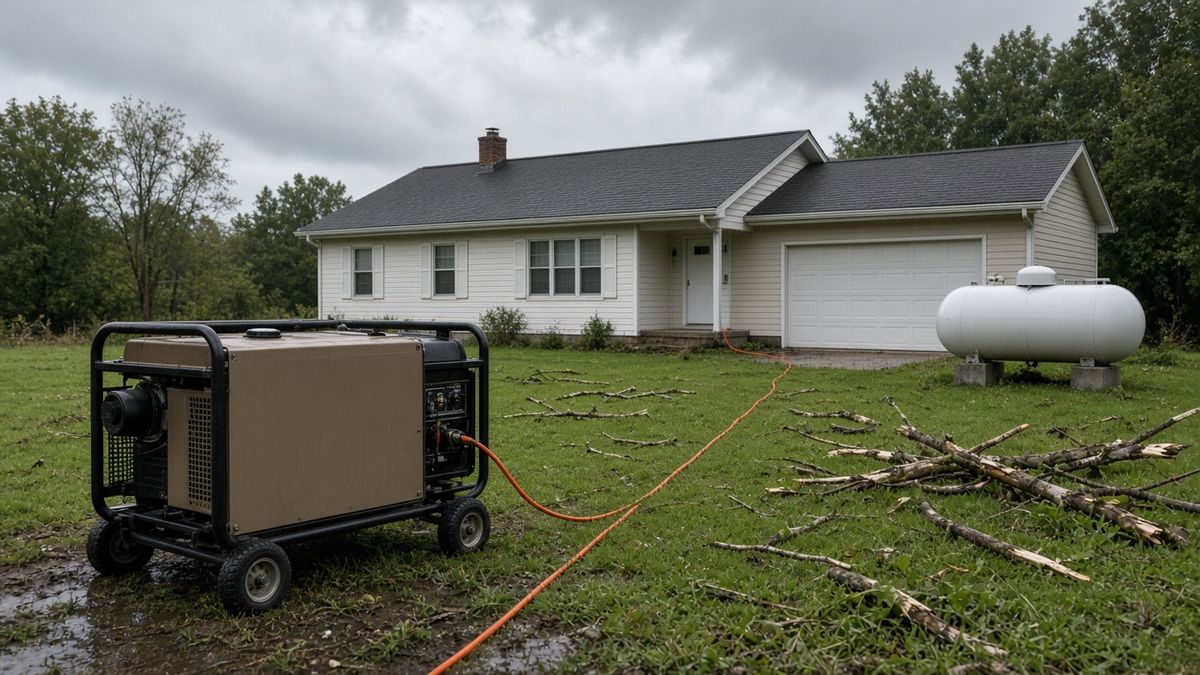
NIST's generator guidance calls for at least 25 feet from the home; common storm checklists still say 20. Hurricane Laura's and Hurricane Ian's carbon monoxide tolls show why the distance and a working CO alarm matter.
The Situation
A customer who parks a portable generator 20 feet from the house is following the number on most storm checklists, and is still 5 feet short of what the National Institute of Standards and Technology recommends. NIST's generator-safety guidance puts the unit at least 25 feet from the home, with the exhaust pointed away from open windows, doors and vents.
With weeks of hurricane season left and winter outages behind it, that 5-foot gap belongs in every dealer's pre-storm handout.
The Facts
The 20-foot figure is everywhere. HurriTrack's generator guide calls it the general safety guidance, and the storm-safety graphic CBS News Miami published for Floridians says to keep a generator at least 20 feet from doors and windows. NIST's page goes further on distance, noting that a generator outside but too close to the home can also be dangerous.
On the garage, every source agrees. NIST says never to put a generator indoors, including a garage, basement or crawlspace, even with doors and windows open. HurriTrack adds that carbon monoxide can build up in a garage and seep into the house with the door open.
"Using a generator can kill you in minutes," the U.S. Consumer Product Safety Commission has warned, as quoted by CBS News Miami.
The storm record explains the warning. CBS News Miami reports that Hurricane Laura caused 15 deaths in 2020, eight of them from generator carbon monoxide poisoning. In the two weeks after Hurricane Ian hit Florida in 2022, at least 41 people suffered carbon monoxide poisoning, the Tampa Bay Times reported, citing the Florida Department of Health.
Before Ian, then-National Weather Service director Ken Graham said storms like Laura had produced more deaths from generators afterward than from storm surge of 16 to 18 feet.
HurriTrack also warns against backfeeding, which it describes as connecting a generator directly to household wiring without a properly installed transfer switch.
Business Impact
Many propane retailers sell, fuel or service portable and standby generators, so this number lives in your own product literature and delivery tickets, not only in general safety tips.
A battery-powered CO alarm watches for generator exhaust; if it sounds, everyone gets outside to fresh air and calls for emergency help. It does not replace a customer knowing the smell of a propane leak. If they smell gas, PERC’s advice is to put out any flame, leave light switches and phones alone inside, and get everyone out right away; then call your office from a safe place, or the fire department if they can’t reach you or anything looks dangerous. That order follows the Propane Education & Research Council's consumer guidance.
What this means for your business: 1. A handout that says 20 feet is short of NIST's recommendation by 5 feet. 2. The garage is off-limits with the door open or shut. 3. Customers need a working CO alarm and leak awareness, not one or the other. 4. A backfeeding question on a service call is an opening to recommend a licensed transfer-switch install.
Key Data Points
- NIST: at least 25 feet from the home, exhaust aimed away from windows, doors and vents.
- Common storm checklists: at least 20 feet.
- Backfeeding through household wiring without a transfer switch is dangerous.
- Hurricane Laura (2020): 15 deaths, eight from generator carbon monoxide.
- Hurricane Ian (2022): at least 41 carbon monoxide poisonings in two weeks, per the Florida Department of Health.
Key Takeaways
- NIST recommends at least 25 feet between a portable generator and the home; most storm checklists still say 20.
- No source allows a generator in a garage, even with the door open.
- Hurricane Laura's 2020 toll included eight generator carbon monoxide deaths.
- A CO alarm and propane leak awareness do different jobs, and customers need both.
Action Steps
- 1.Pull your pre-storm generator handout this week and change 20 feet to 25 feet, with the exhaust pointed away from the house.
- 2.Add a no-garage line to every generator delivery and service ticket, stating that an open door does not make it safe.
- 3.On storm-prep calls, ask whether the customer's CO alarm has fresh batteries, and remind them it won't catch a propane leak.
- 4.When a customer mentions plugging a generator into a household outlet, point them to a licensed electrician for a transfer switch before the next storm watch.
Competitive Advantage
A dealer whose handout already says 25 feet reads as the current, safety-first source when customers compare notes after a storm.
Pull your storm-prep handout this week. Does it still say 20 feet, or has it caught up to NIST's 25?
Get the next one in your inbox.
Free propane industry news, twice a week. 30,000+ operators already read it.
No spam, unsubscribe anytime. We'll email you a link to confirm — that's how we keep the list real. Cloudflare processes a short bot-check token on this form. See our privacy policy.
Published by PropaneInsider.com
AI-powered propane industry news for 30,000+ professionals
Propane Insider is published by the makers of Tank Spotter, Custom Fuel App, Blink Fuel, PIMS and Propane Safety Pro; some links go to advertisers.