
Three Valve Makers Set a 10–12-Year Life Note for OPD Relief Valves Nov. 1
Cavagna, Grand Hall, SCG plan 10–12-year OPD relief life note Nov. 1
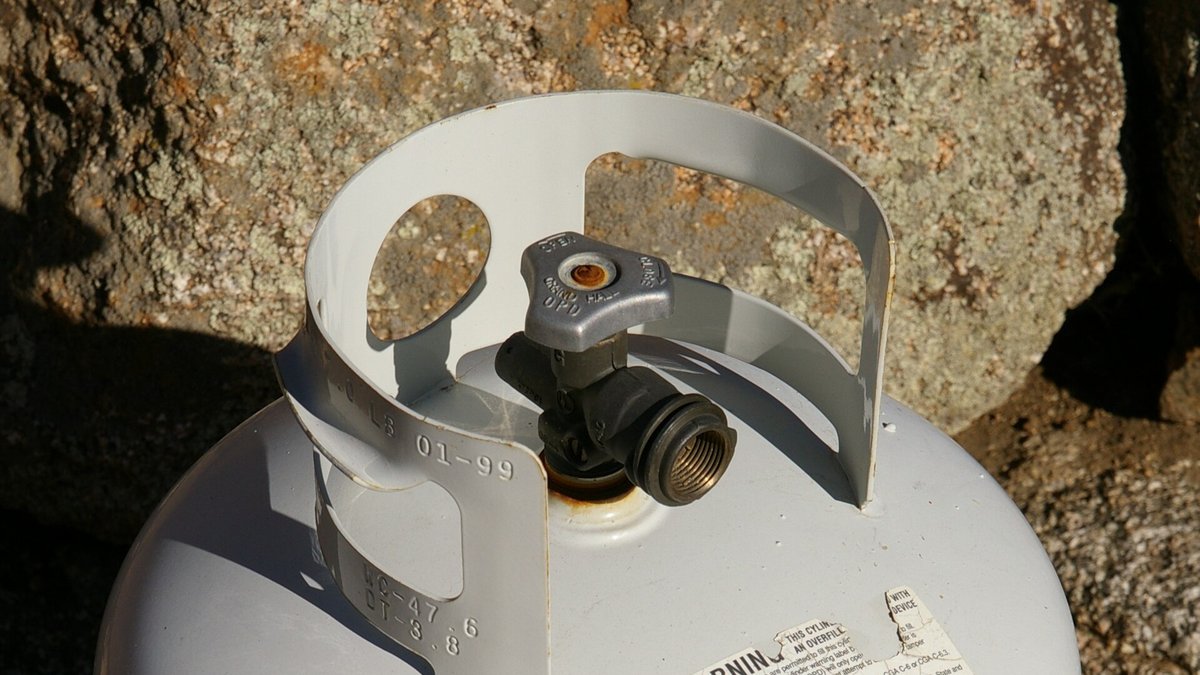
The November release is manufacturer guidance. DOT has not set a relief-valve service life, and NPGA and PERC say the data behind the recommendation has not been made public.
The Situation
Every cylinder in your exchange cage with an OPD valve could soon carry a manufacturer's service-life recommendation for its relief valve. Three valve makers, Cavagna, Grand Hall and SCG Co., Ltd., intend to issue a 10–12-year recommendation on Nov. 1, 2026, according to a Sept. 17 notice from NPGA and PERC. The notice says the recommendation appears to rest on confidential company data, including a study the makers commissioned, that has not been made public.
The Facts
The relief valve in an OPD is built into the valve. It cannot be replaced or tested on its own without degassing the cylinder and removing the valve, the notice explains. (The OPD is the device that stops a cylinder from filling past 80% capacity.) For a dealer, a service-life recommendation means a valve change-out, not a quick part swap.
DOT has never prescribed a service life for a relief valve. When the Compressed Gas Association wrote a 10-year life span for relief devices into CGA S-1.1 in 1996, DOT responded with a waiver for relief valves that NPGA and PERC say remains in effect today.
They cite 49 CFR 173.301(f)(1), which requires a cylinder's pressure relief devices to be tested in accordance with CGA S-1.1 but states that compliance with that standard's paragraph 9.1.1 is not required. Their FAQ says no U.S. code, standard or regulation requires changing out relief devices on OPD valves, and that NPGA and PERC had no role in developing the recommendation. They also say they know of no design change to the OPD relief device that would explain it.
The industry has tested this question before. A 2002 NPGA study, published in 2003, found no age-related performance problems in relief valves, including those in OPD valves. PERC's page on that program says Battelle Memorial Institute did the work: nearly 400 cylinders were visually inspected to CGA C-6, more than 200 went through hydrostatic burst testing at a 960 psi minimum design burst pressure, and over 230 relief valves were tested with procedures adapted from CGA S-1.1.
NPGA and PERC asked the makers to hold the release until Underwriters Laboratories completes a statistically relevant relief-valve study. PERC is commissioning that study and expects results in March 2027. The makers declined. PERC expects to receive the makers' own study, though a non-disclosure agreement may limit what it can share.
Business Impact
Dealer guidance, not reported news: customers and drivers will hear about the recommendation before they read the fine print. The notice gives you three facts to anchor the conversation.
DOT has never set a relief-valve service life. No U.S. code requires an OPD relief-device change-out. An independent UL study is due in March 2027.
NPGA and PERC share information but do not make recommendations on your business decisions, so the change-out policy for cylinders you own stays your call.
Key Data Points
- Recommendation: a 10–12-year service life for relief valves inside OPD valves, from Cavagna, Grand Hall and SCG, due Nov. 1, 2026.
- No U.S. code, standard or regulation requires changing out OPD relief devices, per the NPGA/PERC FAQ.
- The UL relief-valve study PERC is commissioning is expected in March 2027.
Key Takeaways
- The makers' recommendation is not a DOT rule or a code requirement.
- The last industry study, from 2002, found no age-related relief-valve problems.
- Your change-out policy remains a business decision until the UL data is in.
Action Steps
- 1.Print the Sept. 17 NPGA/PERC notice and keep a copy at the fill bench and the exchange desk.
- 2.Brief phone and fill staff on the three anchor facts before customers start asking.
- 3.Pull valve dates on the cylinders you own or control so you know your exposure.
- 4.Watch for the makers' published details and the UL results, then set your own policy.
- 5.Send technical questions to Eric Kuster at PERC or Chris Wagner at NPGA, the contacts listed on the notice.
Competitive Advantage
The dealer who already knows the age mix of their OPD cylinders can answer a worried customer in one sentence the week the recommendation lands.
How many OPD cylinders in your cage would fall inside a 10–12-year window today? Count them this week.
Get the next one in your inbox.
Free propane industry news, twice a week. 30,000+ operators already read it.
No spam, unsubscribe anytime. We'll email you a link to confirm — that's how we keep the list real. Cloudflare processes a short bot-check token on this form. See our privacy policy.
Published by PropaneInsider.com
AI-powered propane industry news for 30,000+ professionals
Propane Insider is published by the makers of Tank Spotter, Custom Fuel App, Blink Fuel, PIMS and Propane Safety Pro; some links go to advertisers.