
Morgantown Transit Runs Five Propane Buses, Eyes Seven More on Supplier-Built Station
Are the transit cutaways in your radius ready for propane?
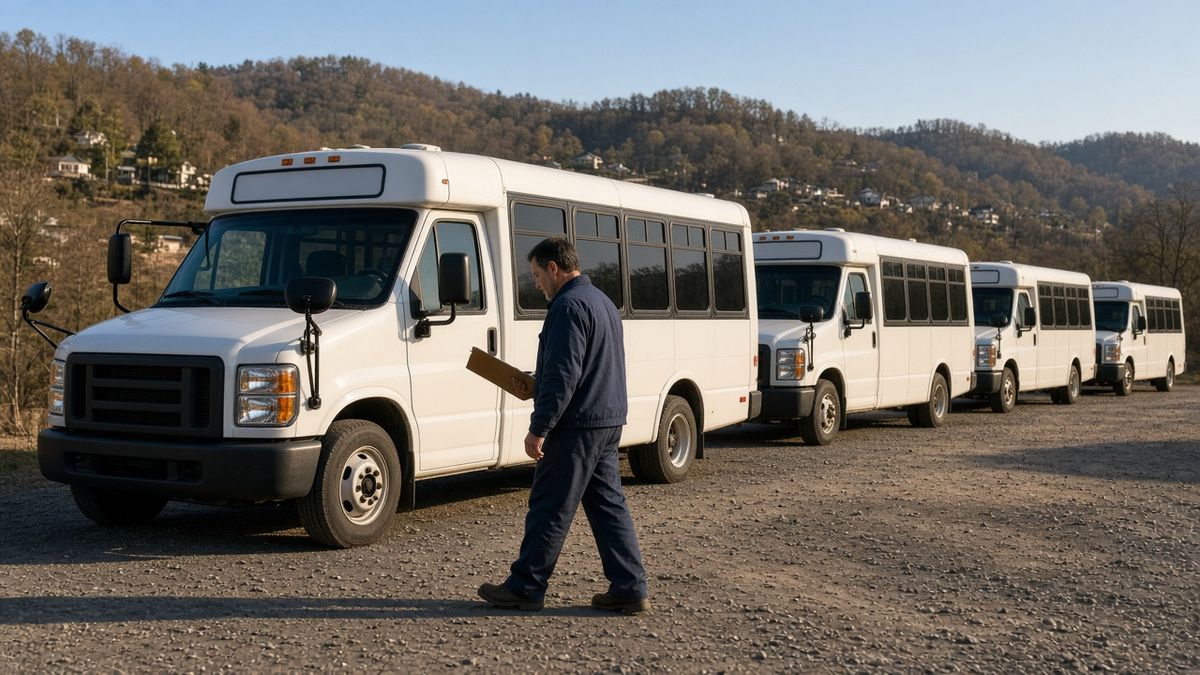
Mountain Line's model pairs a supplier-built fueling station with a fuel contract, and its release claims autogas averages about 40% below gasoline and 50% below diesel. Federal test status on one cutaway opens transit budgets to dealers.
The Situation
Propane dealers chasing fleet gallons got a working template in Morgantown, W.Va., on Sept. 17, 2026. That day Mountain Line Transit Authority showed off five propane autogas light-duty buses fueling from a station on its own lot. General manager Maria Smith told WAJR the agency will order "about another seven vehicles" next year. As gasoline units reach the end of their useful life, she said, Mountain Line will retire them and replace them with propane. The order has not been placed yet.
The Facts
The dealer angle sits in the agency's Sept. 17 release. Ferrellgas, Mountain Line's propane supplier, provided the on-site station at no cost under a fuel contract. The release does not disclose that contract's volume, length or pricing. In the release, Smith described the cost of bringing propane into the fleet as minimal.
The release says the ROUSH CleanTech Ford E-450 cutaway is the only propane vehicle to finish the FTA's New Model Bus Testing Program, known as Altoona Testing. According to the release, that status lets transit operators use federal funds covering 85% of vehicle cost against a 15% local match. The same release counts more than 100 U.S. transit agencies running propane vehicles. It also claims unaided starts down to -40°F and a range beyond 350 miles per fill.
Fuel spending pushed the switch, WAJR reported. Ferrellgas representative Brian Raygor told the station that a quick-connect fitting lets fuel flow only while it is attached to the vehicle. WAJR quoted State Sen. Mike Oliverio describing Morgantown as the first West Virginia city with propane buses.
Some details don't line up. The release describes five new clean-fuel vehicles. WAJR wrote that the fleet would be "doubled within the next year" and quoted Smith on about seven more, so the final fleet size is still open. The savings and emissions percentages in the release come from the agency and ROUSH CleanTech. Neither source cites independent testing behind them, and real results will vary with local fuel prices, duty cycle and contract terms.
Business Impact
Mountain Line's deal shows how a dealer turns infrastructure into gallons. The supplier pays for the station, and the contract earns the return. Transit buyers also run on public calendars. A vehicle that has cleared federal testing makes the shortlist when replacement money comes through.
What this means for your business: 1. Offering a station removes a small agency's biggest objection, which is the upfront cost. 2. Replacement cycles give you a dated pipeline of target vehicles. 3. Public fleets refuel at one depot, so delivery planning stays simple. 4. A first win in a state gives legislators a story to repeat in the next town.
Key Data Points
- WAJR reports each planned bus will carry about a dozen passengers.
- Per WAJR, the pilot showed little to no difference in fuel mileage from the gasoline units on the same routes.
- The release says all Mountain Line propane vehicles are certified to 0.02 grams per brake horsepower-hour and claims they emit 90% less NOx than EPA's strictest standard.
- ROUSH CleanTech's release claims its fuel systems lower eight EPA- and CARB-measured outputs by an average of 64%.
- The release says more than 90% of U.S. propane supply is produced domestically.
Key Takeaways
- Treat a free on-site station as a capital bet repaid through contract gallons, and model the payback before you offer one.
- Time your transit pitch to the buyer's replacement calendar, because aging gasoline cutaways are where the door opens.
- Bring the Altoona test status to the first meeting, since federal match rules shape what a transit board can buy.
- Line up local officials early; WAJR reported that the Morgantown expansion drew bipartisan support from state legislators.
Action Steps
- 1.Price a turnkey autogas dispenser package, including storage, pump and quick-connect nozzle, so your team can quote it in the first meeting.
- 2.Draft a fuel-contract template covering term, minimum volume and price-adjustment language, ready for a public agency's legal review.
- 3.Brief your commercial sales rep on the FTA Altoona program so they can explain it to a transit manager in plain terms.
- 4.Pull the list of transit, paratransit and senior-van operators inside your delivery radius, and check which run Ford E-450 cutaways due for replacement. Ask each fleet manager whether they know that Altoona-tested propane cutaways qualify for the FTA's 85% federal share, and open with an offer of an on-site station and a fuel contract.
Competitive Advantage
Dealers who walk into a transit office with a station design, a draft fuel contract and a working grasp of federal match rules will outsell the dealer who brings only a price sheet. Public buyers reward the vendor who cuts their paperwork, and a supplier-built station makes propane the easiest option on the table.
Which transit or senior-van fleet in your delivery area has cutaways aging out, and has anyone on your team called them yet?
Get the next one in your inbox.
Free propane industry news, twice a week. 30,000+ operators already read it.
No spam, unsubscribe anytime. We'll email you a link to confirm — that's how we keep the list real. Cloudflare processes a short bot-check token on this form. See our privacy policy.
Published by PropaneInsider.com
AI-powered propane industry news for 30,000+ professionals
Propane Insider is published by the makers of Tank Spotter, Custom Fuel App, Blink Fuel, PIMS and Propane Safety Pro; some links go to advertisers.