
Algodones Fire Puts Your Next Residential Pad Walk on the Clock
Algodones Propane Fire: Did You Walk the Pad?
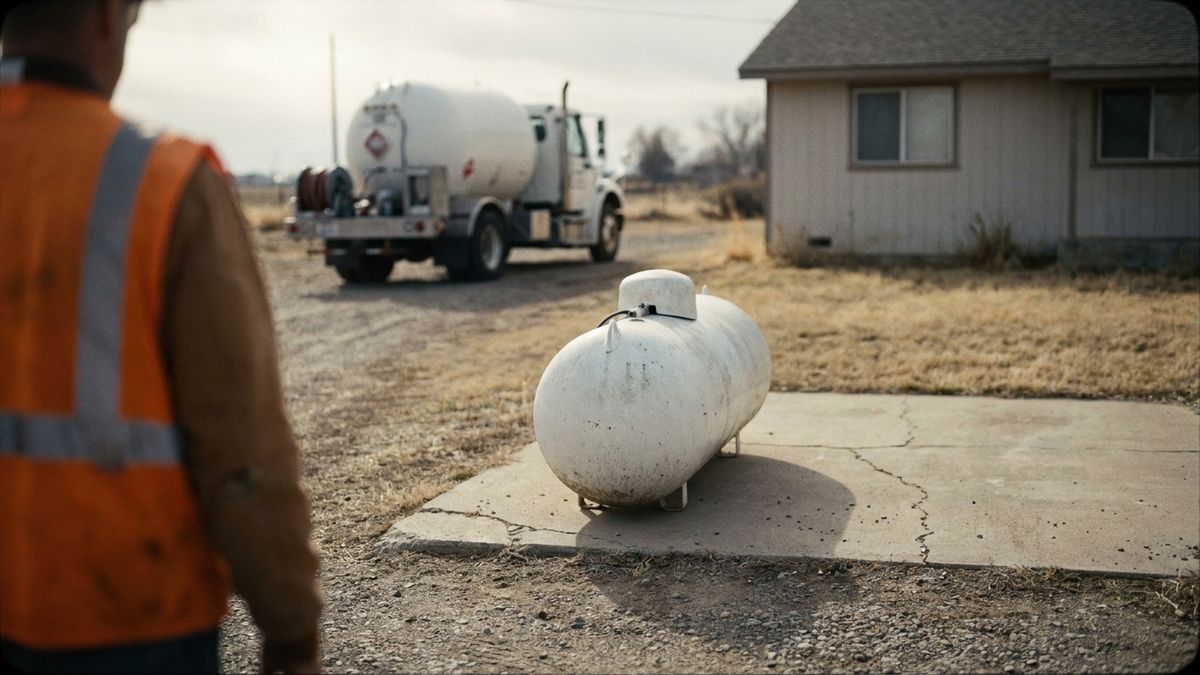
A house fire in Algodones included a propane explosion. No one was hurt. Walk the pad before you fill, and write the tank's condition before you climb back in the cab.
The Situation
Walk the tank, the regulator, and the hose end before you open a valve. That is the job on every residential pad this week. The Santa Fe New Mexican reported a house fire in Algodones that included a propane explosion. No one was hurt. The report does not say what failed. You still own those minutes on the pad. Fill first and look second, and you miss the dent, the wet regulator, or the hose that never should have left the reel.
The Facts
Cab first, hose second Your pre-trip already covers brakes, lights, chocks, the extinguisher, and whether you can reach the ESV from the ground. Finish that work in the yard. Then put your hands on the liquid hose and check the cover, the couplings, and the reel. A cut you would have caught at the plant is the same cut on a customer's lawn. Pull it now.
Walk the pad like you mean it Park and chock, then shut the truck down the way your company wrote it. Walk the shell first. Look for dents, scrapes, sunken feet, and brush piled against the vessel. Then check the dome, the relief opening, the regulator for standing water, and piping that has been yanked. You are auditing the stop. You are not racing the ticket.
Do not open product on a bad pad If the tank looks wrong, radio dispatch before you connect. Do not top it off and confess later. The driver who starts liquid into a bad container owns that fill. A customer in a hurry does not change the rule. Your name is on the ticket.
Write it while you still see it Do not rebuild the inspection from memory after you hit the road. Notes taken in the cab later do not match the tank. Record the shell, the regulator, the hose, and what the customer told you while you still stand there. If the office still wants paper, the paper has to be true.
What a red flag looks like Look for fresh earth over piping, a regulator on its side, braid showing through the hose cover, or a tank scooted closer to the house since your last visit. Those are red flags. Any of those and you stop. Radio dispatch and wait. Do not talk yourself into one more gallon.
Business Impact
A local house fire that mentions propane still lands on your door. Customers watch how you work. So does the next reporter. A skipped walkaround is how a small company ends up explaining a fill it should never have started.
What this means for your business: 1. A residential fire with propane in the headline puts every bobtail on that paper's map, including yours. 2. The next pad gets more eyes on your chocks, your hose, and whether you look before you fill. 3. If questions come later, only notes written at the tank will hold. 4. This week you walk, write, and radio dispatch on any red flag.
Key Data Points
- A bobtail liquid hose with cover damage is a yard reject, not a road decision.
- Chocking and shutting down before the pad walk keeps the truck from rolling while you are at the dome.
- Starting product into a tank with sunken feet or yanked piping makes the fill the driver's problem.
- Inspection notes taken at the tank are the only notes that describe the tank.
- A tank relocated toward the house since the last delivery is a red flag, not a routine top-off.
Key Takeaways
- A pre-trip that skips the liquid hose just moves the defect onto the customer's pad.
- The walkaround happens before the fill valve opens, not after the ticket is printed.
- Notes written in the cab after you leave the stop do not match the tank you actually saw.
- Fresh earth, a regulator on its side, exposed braid, or a moved tank is a stop-and-radio event.
Action Steps
- 1.Tonight, inspect your liquid hose, couplings, and reel in the yard the same way you will inspect a customer tank.
- 2.At tomorrow's first three residential stops, walk the shell, dome, and regulator before you connect.
- 3.If any pad shows a red flag, radio dispatch before product moves. Do not fill and report later.
- 4.After the third stop, tell dispatch which red flag you almost talked yourself past.
Competitive Advantage
Drivers who walk the pad and write the condition while they still stand there give the office a real record. That record is what a small company has when a customer or an insurer asks what the tank looked like on delivery day. Speed on a bad pad is not a win.
On tomorrow's first residential pad, which red flag would you radio in — fresh earth, a regulator on its side, exposed braid, or a tank scooted toward the house — and which would you talk yourself past?
Get the next one in your inbox.
Free propane industry news, twice a week. 30,000+ operators already read it.
No spam, unsubscribe anytime. We'll email you a link to confirm — that's how we keep the list real. Cloudflare processes a short bot-check token on this form. See our privacy policy.
Published by PropaneInsider.com
AI-powered propane industry news for 30,000+ professionals
Propane Insider is published by the makers of Tank Spotter, Custom Fuel App, Blink Fuel, PIMS and Propane Safety Pro; some links go to advertisers.