
31,000-Barrel Release Puts Your Bobtail Pre-Trip on Notice
Is Your Bobtail Leak Walk-Down Tight?
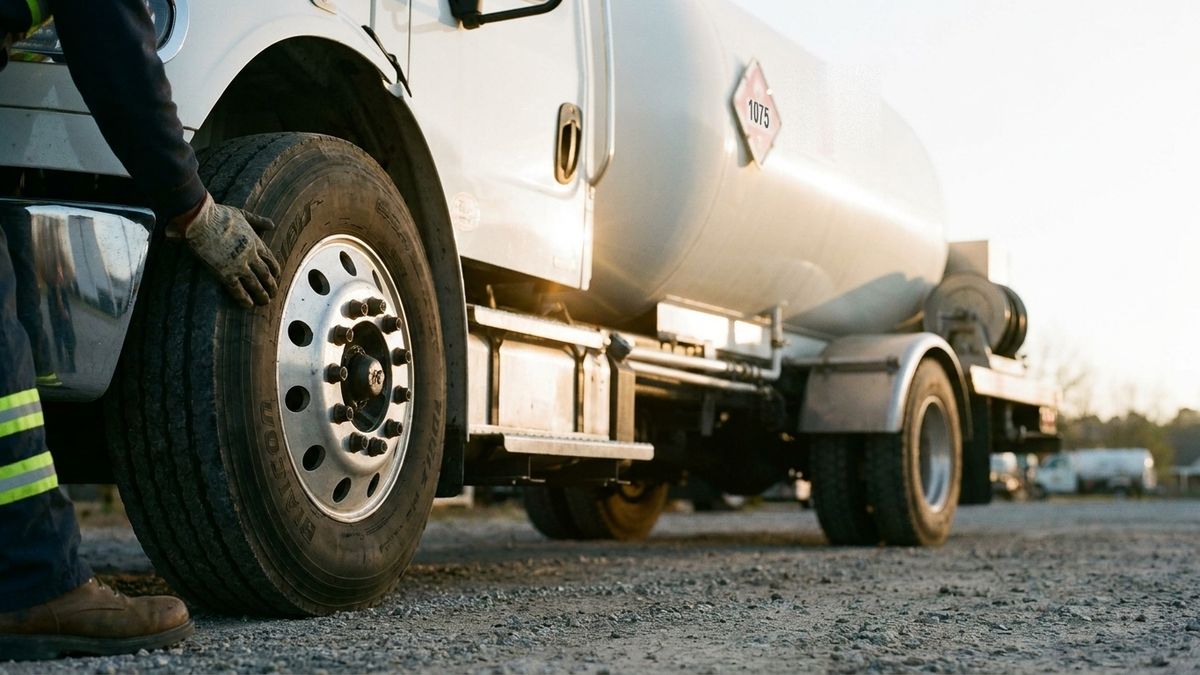
A 31,000-barrel propane and butane rupture is on the record. Your control this week is the bobtail walk-down: shell, hose, ACME, and the stop rule if vapor appears.
The Situation
Walk this leak-and-valve check on your bobtail before you leave the yard tomorrow. Enbridge released 31,000 barrels of propane and butane after a rupture, Northern News Now reports. You are not on that right-of-way. You are on a loaded truck with the same product. The walk-down below is what you control: shell, piping, hose, connections, and the stop rule if vapor appears. Finish it at the plant. Do not finish it on a customer's gravel after the first delivery already went wrong.
The Facts
Yard walk-down, not a memory check Start at the tank shell. Look for wet spots, frost where it does not belong, and staining at fittings. Trace the liquid line to the meter and the hose reel without opening anything that should stay shut. If a fitting weeps, you do not roll. Tag it and get a mechanic. A form filled from the cab is a false clean check. Write what you actually saw on the iron.
Hose, reel, and the first connection of the day Pull enough hose off the reel to see the cover. Cuts, kinks, and blistered spots are a stop. Check the ACME and the quick-acting valve the way you were trained. A worn gasket is a leak waiting for the first tank. If you find damage, park the truck. You do not squeeze in one more stop on a bad hose.
If you smell gas or see vapor Get everyone away from the area. Call 911 from a safe distance. Then call the plant. Do not start the truck. Do not switch lights. Do not treat it as a ticket you can finish. That order does not change because a customer is waiting in the driveway.
What a red flag looks like A hiss you cannot find. A connection that will not seal after one gasket swap. A relief that has been weeping. Hose with exposed braid. Any of those and the truck stays in the yard. Write the defect before you roll. A clean ticket with a bad hose is not a clean ticket.
Northern News Now did not say where the rupture sat, how it started, or what it did to regional supply. Treat those as unknown. Your job this week is the truck in front of you. Before first stop tomorrow, walk the piping, hose cover, and ACME. Keep any truck with exposed braid or a weeping relief in the yard.
Business Impact
A bulk product loss of this scale is a reminder that propane is unforgiving when containment fails. For a family plant, the exposure is not a transmission line. It is a leaking hose, a missed weeper, or a driver who rolled with a known defect. Sun on a parked bobtail still cooks hose covers in New Hampshire or Florida. A defect found in the yard is a shop ticket. The same defect on a driveway is an emergency, a parked truck, and a route that has to be rebuilt.
What this means for your business: 1. The reported release shows how fast product leaves a failed system once metal or seal gives way. 2. For a bobtail shop, the lesson is inspection discipline, not pipeline control. 3. A driver-found defect in the yard costs less than the same defect on a customer driveway. 4. Watch hose covers, ACME gaskets, and relief weepers this week. Do not wait for a meeting that may not happen.
Key Data Points
- A form filled from the cab is a false clean check and will not match conditions at the tank.
- Exposed braid, a blistered hose cover, or a weeping relief is a park-the-truck defect.
- If vapor is present, evacuate the area, call 911 from a safe distance, then call the plant.
- Where the rupture sat and what it did to supply are still unconfirmed in the reporting.
- A defect found in the yard is a shop ticket; the same defect on a driveway becomes an emergency stop.
Key Takeaways
- A loaded bobtail carries the same product that left the ruptured line, so your pre-trip is the control you actually have.
- A weeper, a cut hose cover, or a gasket that will not seal is a yard stop, not a first-stop problem.
- If vapor appears, the order is evacuate, call 911 from a safe distance, then call the plant.
- A ticket written from the cab does not match the iron and will not protect you after a leak.
Action Steps
- 1.Before first stop, walk the tank shell, liquid piping, hose cover, ACME, and quick-acting valve in that order.
- 2.If you smell gas or see vapor, get everyone out, call 911 from a safe distance, then call the plant.
- 3.Write every defect on the inspection form at the truck, not from memory in the cab.
- 4.Mark any hose with exposed braid or a weeping relief and keep that truck in the yard until a mechanic clears it.
Competitive Advantage
Drivers who park a bad hose protect their CDL and the plant. Shops that back that call keep known defects off customer driveways. That is how you stay out of the incident file.
From our side of it: the hose test, the creep test and the bulk tank inspection all live in Tank Spotter, on the same phone or tablet your crew already carries. Nothing new to buy, nothing new to lose in a truck. You can set them to remind the team on the first of the month, which is the part that earns its keep when you are tired of babysitting grown men or chasing paperwork that left the yard in somebody's cab. tankspotter.io
If the hose cover is cut tomorrow morning, do you park the truck or try to finish the route?
Get the next one in your inbox.
Free propane industry news, twice a week. 30,000+ operators already read it.
No spam, unsubscribe anytime. We'll email you a link to confirm — that's how we keep the list real. Cloudflare processes a short bot-check token on this form. See our privacy policy.
Published by PropaneInsider.com
AI-powered propane industry news for 30,000+ professionals
Propane Insider is published by the makers of Tank Spotter, Custom Fuel App, Blink Fuel, PIMS and Propane Safety Pro; some links go to advertisers.