
Cape St. Claire Explosion: HVAC Crew Cut the Line. Nobody Smelled the Gas.
Why the 'You Can Smell It' Myth Failed in Annapolis
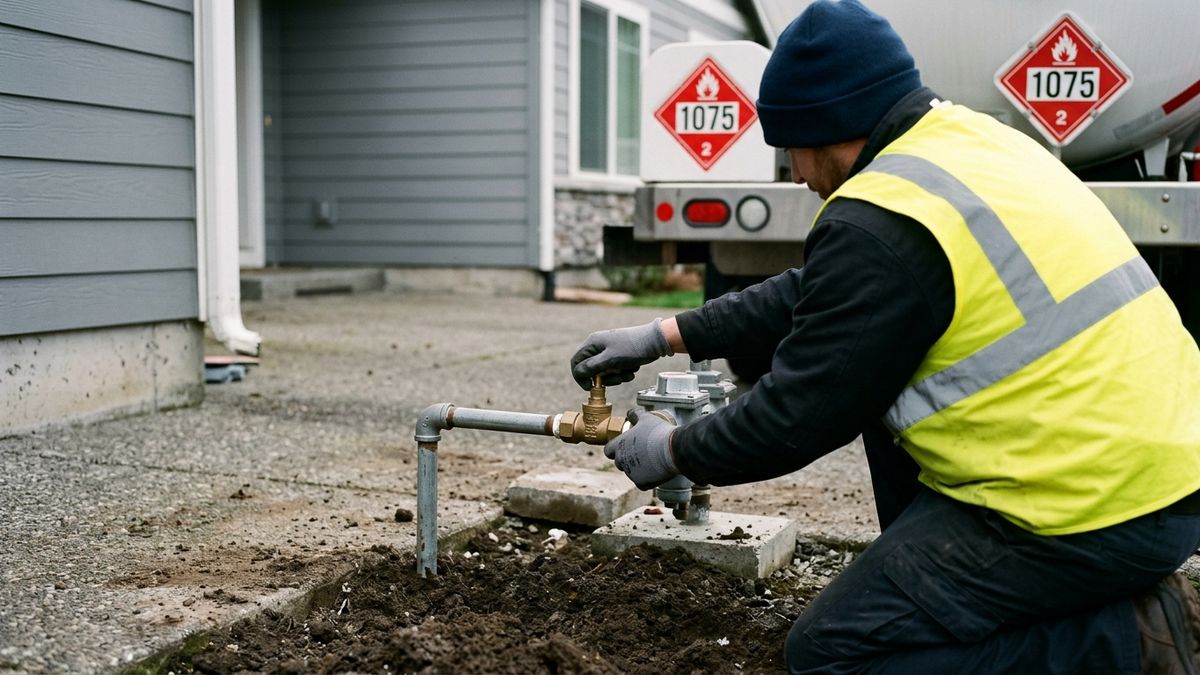
An unnoticed severed propane line triggered the Cape St. Claire explosion. Mercaptan never alerted the occupant. Investigators said the leak built up for hours without a detectable smell before a grinder spark ignited it.
The Situation
A grinder spark met propane that had been leaking for hours inside a Cape St. Claire home last week. The homeowner never smelled the gas. Fire investigators ruled the blast accidental after an HVAC crew cut a buried propane line during routine work. The explosion killed one person and leveled the house. That missed cue exposes a belief many service techs still carry onto every job: if gas is leaking, you will smell it in time.
The Facts
The Myth That Persists Service techs hear it on every new job: propane has that rotten-egg smell, so you will always know if something is wrong. Cape St. Claire proves otherwise. Investigators found the homeowner could not smell the leaking gas even after the line was cut. Mercaptan odor fade, nasal fatigue, or individual smell sensitivity can all defeat the warning.
Why the Belief Survives It survives because most small leaks do give a trained nose enough warning. Techs see successful daily leak checks with soap solution and electronic detectors. They assume the odorant works the same way inside a house as it does on the truck. The Annapolis-area case shows that assumption fails when volume, duration, or air movement dilutes the odor below recognition before ignition.
What the Code Actually Requires NFPA 58 and NFPA 54 both treat odorization as one layer, never the only layer. You still pressure-test any disturbed piping, use a combustible gas indicator on every service call near lines, and treat every excavation as a potential breach until proven otherwise. The 3-minute forms and 10-minute piping pressure test you run on every tank swap exist because smell alone is not reliable.
Business Impact
One missed line cut became a total loss for the homeowner and a major liability event for the marketer and others in the supply chain. Insurance claims, attorney scrutiny, and rate pressure follow every high-profile fatality. What this means for your business: 1. A single overlooked excavation near a service line can produce six- and seven-figure exposure. 2. Fire marshals and insurers will look harder at odorant-effectiveness records and leak-check documentation after a blast like this. 3. Customers who hear about the Annapolis-area explosion will ask harder questions about your leak-check procedures. 4. Techs who default to smell-first checks raise callback and incident risk on every HVAC-adjacent job.
Key Data Points
- Cape St. Claire, Anne Arundel County, Maryland incident occurred during HVAC work on or near propane piping.
- Homeowner reported inability to smell leaking propane before ignition, per fire marshal statements.
- Investigators traced the blast to a severed line ignited by a grinder spark.
- NFPA 58 and NFPA 54 both list odorization as supplemental, not primary, detection.
- Standard field protocol requires an electronic detector plus a soap test on any disturbed line.
Key Takeaways
- Mercaptan odor fade and individual sensitivity mean smell cannot be the primary warning, even when odorant is properly added.
- Any work near buried propane lines demands a pressure test and a combustible gas indicator, whether anyone smells gas or not.
- The Cape St. Claire explosion was ruled accidental and still produced a fatality — one human error can level a house.
- Treating every excavation as a potential line cut until the line is proven intact is the only defensible field practice.
Action Steps
- 1.On every job near buried lines this week, excavate by hand within 18 inches of the marked location before using power tools.
- 2.Run a 10-minute standing pressure test on any piping that was exposed or disturbed.
- 3.Carry and use a calibrated combustible gas indicator instead of trusting your nose first.
- 4.Complete and upload leak-check and pressure-test forms on site before leaving the property.
Competitive Advantage
Techs who treat smell as a secondary confirmation, not primary detection, keep their companies out of the next headline. They finish the pressure test, run the detector, document in real time, and sleep easier knowing one missed cue will not become a courtroom exhibit.
One more thing, from our side of the fence. The sniff test feels mundane, and that is exactly why it gets skipped. We have run into both failure modes: a property owner who never smelled a thing, and product that arrived with the odorant faint or missing. Either one puts you in a hard spot you did not create. Drivers are supposed to smell the product every time they fill the truck, and the honest question is whether you could show next week that yours did. We built Tank Spotter so that check is a tap on the phone the driver already carries, and so the office gets an alert when somebody skips it. Code wants the check performed; it does not ask you to keep a file. The record is for you — so you know the right thing is being done for your customers and your business. tankspotter.io
When was the last time you pressure-tested a line you did not personally smell gas on?
Get the next one in your inbox.
Free propane industry news, twice a week. 30,000+ operators already read it.
No spam, unsubscribe anytime. We'll email you a link to confirm — that's how we keep the list real. Cloudflare processes a short bot-check token on this form. See our privacy policy.
Published by PropaneInsider.com
AI-powered propane industry news for 30,000+ professionals
Propane Insider is published by the makers of Tank Spotter, Custom Fuel App, Blink Fuel, PIMS and Propane Safety Pro; some links go to advertisers.