
The Leak Check Before a Relight Is Code. The Gauge Pressure Is Your AHJ's Call.
Hillsboro Leak Order: What Every Tech Checks Before Relight
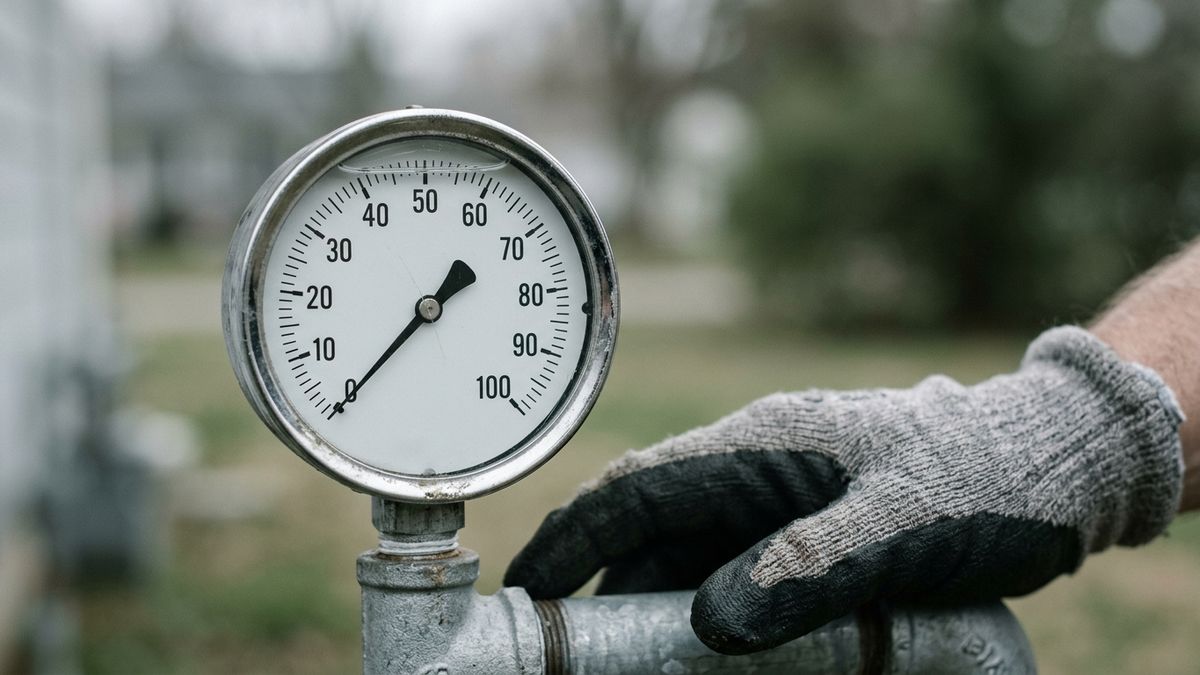
NFPA 54 requires a leak check before service resumes after any interruption — a leak, a runout, or a new install. Skip the check, and you own the exposure if a fire marshal or insurer ever asks what happened.
The Situation
A service tech pulls up on an out-of-gas call in August, cracks the valve, watches the dial settle, and relights the water heater before the truck has finished idling. Tank full. Customer warm. Truck gone.
Depending on which driveway that is, the job may not be finished.
The Facts
Secure the Scene, Then Verify the Shutoff Leave first, call second isn't just customer guidance — it's the rule you follow too. The rotten-egg smell of ethyl mercaptan is the odorant added to normally-odorless propane specifically so a leak is detectable — treat it as a signal to evacuate, not a signal that it is safe to return. Confirm the tank valve position before you touch any fitting, following your company's protocol for when it is safe to do so. Nothing gets pressurized again until that valve position is confirmed and logged.
The requirement lives in the National Fuel Gas Code — NFPA 54 — in the chapter on inspection, testing and purging. Section 8.2.3 is one sentence long and it is not written as a suggestion: immediately after gas is turned on into a new system, or into a system restored after an interruption of service, the piping system shall be checked for leakage. Where leakage is indicated, the code says the supply gets shut off until the repairs are made.
An interruption of service is broader than most customers assume. A closed container valve counts. A depressurized system counts. A tank that ran empty counts. So does a system left off for repair work. The trigger is the interruption itself; the reason for it never enters the code language.
The relight is also the moment to look at combustion. An appliance that sat cold, on a system that may have taken in air, is worth a minute at the vent and a carbon-monoxide check before the tech writes the ticket. Nobody has ever regretted the extra minute on a first-cold-morning call.
The 10-psi number that gets repeated on ride-alongs is a different animal. It is a test pressure. A leak check asks a different question — one proves the piping holds against a gauge, the other confirms nothing is escaping once fuel is back in the line. Where a 10-psi test applies, it usually arrives through a local amendment or an inspector's standing practice rather than through the national text, which sets its own floor as a multiple of the system's maximum working pressure. Ask your AHJ which number they want to see and how long they want it held, and put the answer in the tech's tablet instead of in the tech's memory.
Adopted editions and state amendments vary, and so does what an inspector expects to see documented afterward. Confirm both with your own AHJ rather than with the last company you worked for.
Relight One Appliance at a Time, and Document Everything Work through pilots and burners one at a time, confirming full ignition and a stable flame on each before moving to the next. Photograph the gauge reading at the end of your hold time, and log the GPS location and timestamp.
Business Impact
A callback to redo a leak check because the first one wasn't documented costs a truck roll, a tech's hour, and a customer's confidence — real money on a day your dispatcher already has a full board.
What this means for your business: 1. A shelter-in-place event like Hillsboro's puts every leak-response step under public scrutiny, including yours. 2. A documented leak check and pressure test is the only proof the job was done right if a fire marshal or insurer asks weeks later. 3. Undocumented restorations generate more callbacks, and every callback is an unpaid hour your tech isn't spending on billable service work. 4. Techs and safety managers who standardize documentation now avoid scrambling to reconstruct records during an active claim or audit.
Key Data Points
- Propane is odorized with ethyl mercaptan specifically so an otherwise undetectable leak reads as a smell every customer can identify.
- A propane tank leak in Hillsboro prompted a temporary shelter-in-place order Sunday night, per AOL.com.
- NFPA 54 requires a leak check before gas service is restored after any interruption — runout, leak, or new install.
Key Takeaways
- Relighting appliances one at a time and documenting each with a photo and timestamp turns a routine restoration into evidence that holds up months later.
- A leak check skipped to save ten minutes on a runout call is the same ten minutes that turns into a callback, a comeback, and a customer who remembers both.
Action Steps
- 1.Call your AHJ and ask two questions: what test pressure they expect after a restored-service leak check, and what documentation they want to see on file.
- 2.Write the answer into your service-ticket template so a relight cannot be closed without the leak check recorded.
- 3.Pull last season's out-of-gas tickets and check how many show a documented leak check. That number is your exposure.
- 4.Confirm every tech can say the difference between a pressure test and a leak check out loud. If they cannot, the ticket will not be right either.
Competitive Advantage
Techs who document every leak check and pressure test the same way, every time, give their company a clean record the moment an insurer or fire marshal asks.
From our side of it: this is a slow job made slower by writing it up twice. Tank Spotter took Gold — World LPG Association (WLPGA) World Safety Technology competition. In it the tech speaks his notes in with voice-to-text, grabs the photo, the GPS stamp and the signature right there at the tank, and the spot-check runs itself — so the ticket is done when he walks back to the truck, not that night in the cab. It is the tool we build and stand behind. tankspotter.io
Insurance professionals at Aegis, Nationwide, and eMaxx Assurance Group have recommended Tank Spotter to propane operators they work with.
If your leak-check paperwork got pulled for an audit tomorrow, would every tech's file look the same?
Get the next one in your inbox.
Free propane industry news, twice a week. 30,000+ operators already read it.
No spam, unsubscribe anytime. We'll email you a link to confirm — that's how we keep the list real. Cloudflare processes a short bot-check token on this form. See our privacy policy.
Published by PropaneInsider.com
AI-powered propane industry news for 30,000+ professionals
Propane Insider is published by the makers of Tank Spotter, Custom Fuel App, Blink Fuel, PIMS and Propane Safety Pro; some links go to advertisers.