
Match Your Bobtail Loan Payments to Your Winter Cash Flow, Not the Calendar
Is Your Propane Fleet Loan Timed to Your Cash Flow?
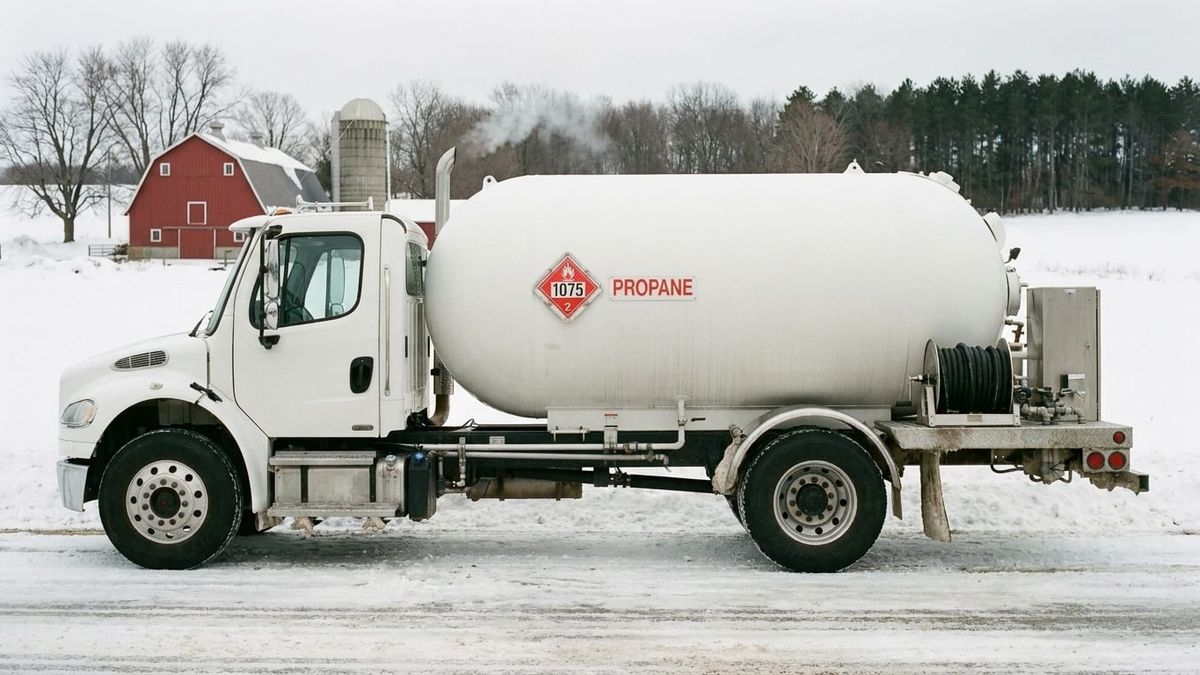
A flat monthly loan payment on seasonal propane revenue drains cash every summer, months before the season that pays for it. Ask your lender for a seasonal or skip-payment structure, and confirm this year's Section 179 cap with your CPA.
The Situation
Most equipment loans default to a flat monthly payment — the same bill due in July as in January — even though a propane company's cash comes in almost entirely during the heating months. That mismatch quietly drains working capital every summer, forcing a draw on the line of credit to cover a truck payment months before the season that actually pays for it. Fixing it isn't complicated, but it does require asking your lender for something other than their standard amortization schedule before you sign, not after.
The Facts
Step 1: Map Your Cash Calendar Against the Loan Calendar Before financing anything, lay your monthly cash-in against your monthly debt payments for the next 24 months. If your heaviest AR collections land in the four coldest months but your loan payment is identical every month, you've found the problem — you're carrying full debt service through your leanest cash months on assumption, not on plan.
Step 2: Ask for a Seasonal or Skip-Payment Structure by Name Seasonal and skip-payment loan structures are standard in agricultural and equipment lending. They let you skip or reduce payments during your low-cash months and pay more during peak season. That is a cash-flow trade, not a free one — carrying principal longer usually means you pay more total interest over the life of the loan, and some structures extend the term. Ask your lender to put both the total finance charge and the payoff date side by side against a standard schedule before you sign. Most bankers won't offer this unless you ask for it specifically — it's not the default product on the shelf.
Step 3: Run Lease-vs-Buy on Total Cost, Not Monthly Payment A lease payment that looks smaller than a loan payment can still cost more over the life of the truck once you factor in mileage caps, end-of-term buyout, and how the lease is treated. Which side gets the depreciation depends on how the lease is structured, not on the word lease: a true operating lease generally leaves the tax benefit with the lessor and gives you a rent deduction instead, while a finance lease with a nominal buyout is generally treated as a purchase, so the truck and the depreciation land on your books. Either way the obligation shows up on your balance sheet under current accounting rules, so leasing does not automatically leave your borrowing capacity untouched — ask your banker how they count it. Run both scenarios over the full expected life of the asset, not just year one.
Step 4: Time Capital Purchases to the Tax Year, Carefully Section 179 lets you expense qualifying equipment in the year you place it in service, up to the federal cap for the current tax year. Those caps and phase-out thresholds change periodically under federal tax law, so confirm this year's exact numbers with your CPA before committing capital near year-end — don't assume last year's figure still applies.
Step 5: Review Your Banker Relationship Before You Shop, Not During The best time to renegotiate financing terms is before you're standing on a dealer lot with a delivery date already set. An annual sit-down with your banker, outside of any active purchase, is what gets you the seasonal structure and the rate conversation on your terms instead of theirs.
Business Impact
A flat-payment loan on seasonal revenue drags on your cash position every summer, whether or not you ever miss a payment. Companies carrying several equipment loans on the same flat schedule compound the problem across every truck they finance.
What this means for your business: 1. A mismatched loan schedule pushes you onto your line of credit during your leanest months, so you pay line-of-credit interest on top of the truck payment. A seasonal structure moves that cost rather than erasing it — ask what the reshaped loan adds in total finance charge, then compare it against what those draws cost you. 2. A seasonal or skip-payment structure, once in place, frees that same cash for driver bonuses, insurance premiums, or the next truck's down payment. 3. Getting the Section 179 timing right can shift a purchase decision by weeks and change your tax bill for the year. 4. A banker relationship reviewed annually, ahead of any purchase, puts you in a stronger position to negotiate.
Key Data Points
- Propane company cash flow concentrates heavily in the coldest months of the year, while standard equipment loans default to flat, year-round payments.
- Seasonal and skip-payment loan structures are an established feature of agricultural and equipment lending, not a custom product you have to invent.
- Section 179 equipment-expensing caps and phase-out thresholds change periodically under federal tax law — confirm the current tax-year limit with your CPA.
- Lease-vs-buy math should account for mileage caps, buyout terms, and forgone depreciation, not just the monthly payment comparison.
Key Takeaways
- A flat monthly loan payment on seasonal propane revenue drains working capital every summer — map your cash calendar against your loan calendar before you sign anything.
- Seasonal and skip-payment loan structures exist in equipment lending, but most lenders only offer them if you ask for them by name.
- Section 179 caps and phase-out thresholds shift by tax year under federal rules — confirm the current figure with your CPA rather than assuming last year's number still applies.
- Lease-vs-buy decisions should run on total cost of ownership over the asset's full life, not the size of the monthly payment alone.
Action Steps
- 1.Lay out your next 24 months of expected AR collections against your current loan payment schedule and flag any month where debt service outpaces cash-in.
- 2.Call your lender this week and ask specifically whether they offer a seasonal or skip-payment structure for equipment loans.
- 3.Before your next equipment purchase, ask your CPA to confirm this tax year's Section 179 cap and phase-out threshold in writing.
- 4.Schedule an annual sit-down with your banker outside of any active purchase, and bring your 24-month cash map to that meeting.
Competitive Advantage
Owners who negotiate seasonal loan terms before they need a truck walk onto the dealer's lot with financing already lined up on their own schedule, not scrambling to accept whatever amortization the lender defaults to under a delivery deadline.
This is general industry information, not financial, tax, or legal advice. Loan structures, lease treatment, and tax rules turn on your own numbers and your own state — confirm anything here with your lender, your CPA, and your attorney before you sign.
If your next four loan payments landed in July instead of January, would your cash position survive it without touching the line of credit?
Get the next one in your inbox.
Free propane industry news, twice a week. 30,000+ operators already read it.
No spam, unsubscribe anytime. We'll email you a link to confirm — that's how we keep the list real. Cloudflare processes a short bot-check token on this form. See our privacy policy.
Published by PropaneInsider.com
AI-powered propane industry news for 30,000+ professionals
Propane Insider is published by the makers of Tank Spotter, Custom Fuel App, Blink Fuel, PIMS and Propane Safety Pro; some links go to advertisers.