
Nobody Calls to Tell You the Website Is Broken
Nobody Calls to Tell You the Website Is Broken
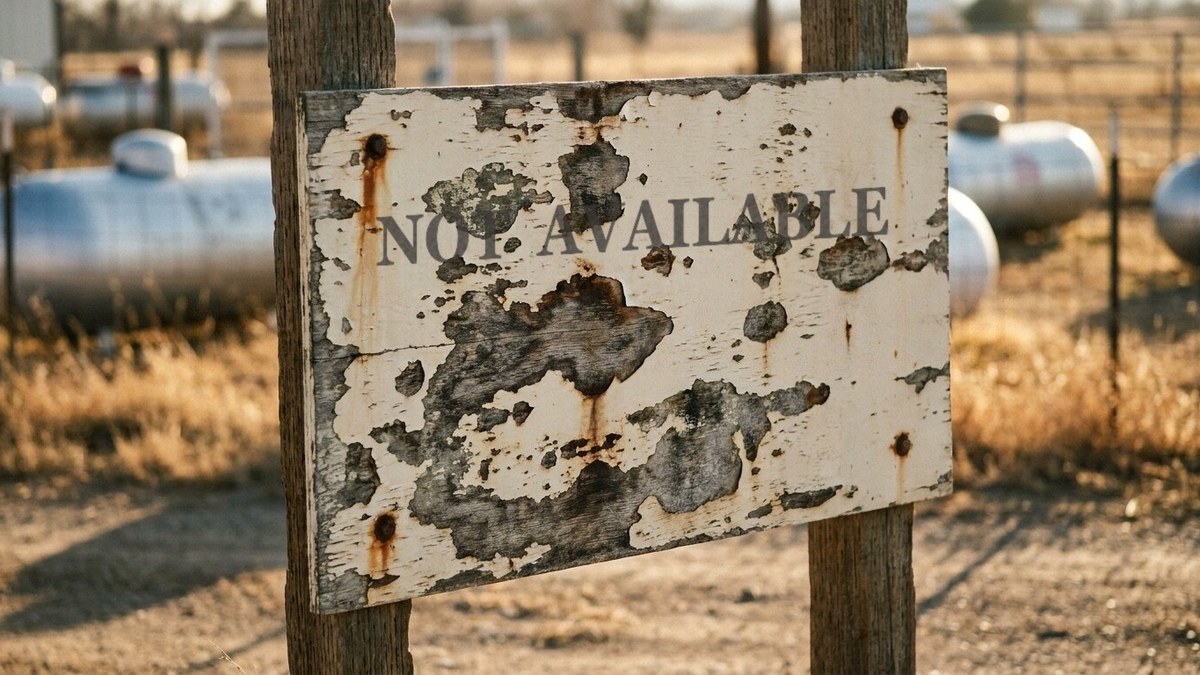
With Chrome 154 in October 2026, the browser will ask permission before loading any public site without HTTPS — a public notice landing on dealer websites that quietly aged out of usefulness years ago: unreadable on phones, wrong hours, contact forms delivering to nobody, software out of support. The check costs nothing: pull up your own company from a phone and fill out your own form.
The Situation
Six engineers on Google's Chrome Security team published a short post last fall with a date in it. "One year from now, with the release of Chrome 154 in October 2026, we will change the default settings of Chrome to enable 'Always Use Secure Connections,'" the team wrote on Google's security blog on October 28, 2025. Chrome will ask the user's permission before the first visit to any public site that does not run on HTTPS. Google published a screenshot of what that looks like. A gray box, a line warning that attackers could view or change what gets sent, and a choice: continue to the site, or return.
For most of the internet this is housekeeping. Certificates are free and automatic now, and the large platforms handled it years ago. For a propane retailer whose site was stood up in a rush, paid for once, and never opened again, it is closer to a public notice — the first time in years that anybody will be told, in writing, that there is something wrong with the company's website.
The padlock is only the part that will be visible. Underneath it sits a slower problem the trade rarely discusses, because it produces no invoice, no complaint, and no phone call: a dealer's website ages out of usefulness at a pace nobody is watching. Trucks get inspected. Tanks get inspected. The website gets a renewal notice from a registrar once a year, and that is the whole of its maintenance program.
The Facts
The site is on a phone now, and it has been for years
Smartphone ownership finished a decisive shift years ago. Plenty of dealer sites never followed it.
Google is blunt about the consequence. "Google uses the mobile version of a site's content, crawled with the smartphone agent, for indexing and ranking," the company states in its Search Central documentation on mobile-first indexing. The desktop version — the one the owner checks, on the office machine, at a resolution no customer is using — is not the version being judged.
What a stale site does on a phone is specific and easy to reproduce. Body copy renders at a size that takes two fingers to read. The phone number sits inside a header image, so it cannot be tapped. A navigation menu opens and will not close. The tank-sizing table runs off the right edge of the screen and takes the "Request Service" button with it. None of that reads as broken to the person who built it on a 27-inch monitor a decade ago.
Wrong information outlives the people who posted it
Content rot is the quieter half. A staff page listing a service manager who retired two winters back. Office hours changed after the last schedule shuffle and never changed on the site. A pre-buy page describing a program that closed three seasons ago, still sitting there in the fall, still drawing the occasional inquiry from somebody who thinks it is live. A service-area list written when the company ran one yard and never updated after the second one opened, so half the territory the trucks actually cover appears nowhere on the site.
Each of those is a small untruth the company is telling without meaning to. The customer who acts on one rarely sends an email about it. They call the office, learn the information is out of date, and quietly file the company under *not on top of things* — a rough place to be filed in a business whose entire promise is that you will show up.
The exposure sharpens in the season that matters. A homeowner runs out on a Sunday night in January, searches on a phone, lands on a site that says the office closes at five and says nothing about after-hours emergency service, and moves on to the next result. Nobody at the dealer ever learns that visit happened.
The form that goes nowhere
One failure deserves its own paragraph, because it hides better than the rest. A contact form stops delivering.
It happens for ordinary reasons. The form plugin breaks during a server-side software update. The mailbox it points at belonged to somebody who left. The host tightens its outbound mail rules and the site's messages start landing in a spam folder, or nowhere. The form still submits. The visitor still sees a thank-you screen. Nothing bounces, nothing errors, and no alarm exists to fire. The only signal is an absence, and an absence is exactly what a small operator will not notice during a busy stretch.
That silence sits on top of real traffic. BrightLocal's Local Consumer Review Survey 2026, published February 11, found that after reading reviews most consumers "fan out to websites, social feeds, and other platforms for reassurance" rather than buying on the spot. The website is the second stop, and the second stop is where the decision gets made. A dead form turns it into a dead end for a prospect who had already decided to talk to you.
The software underneath is out of support
The security side is measurable, which makes it the easiest part to check and the most commonly skipped. PHP, the language underneath WordPress and most of the common small-business site platforms, publishes a plain support table. As of this writing (August 2026), php.net lists only versions 8.2 through 8.5 as still receiving fixes, and support for 8.2 ends December 31, 2026. Everything older is end-of-life, and php.net's note on that status is direct: users of those releases "may be exposed to unpatched security vulnerabilities."
A site running unmaintained software for years accumulates known, published, catalogued vulnerabilities that take no particular skill to exploit. When one of those sites gets taken over, the damage a dealer sees is rarely dramatic. Usually it is spam pages quietly injected into the site's own directory structure, discovered weeks later, after the search engines have already found them.
Why it stays broken
Top Design Firms, surveying 1,003 small business owners and managers in 2022, found 27% still had no website at all. Among the ones that did, Top Design Firms reported low website traffic as the number one challenge those companies faced with their site, at 14% of respondents. That is the diagnosis in a line: the owner experiences the problem as *not enough people are finding us*, and almost never as *the thing they find does not work*.
Nothing in the structure of a propane business corrects that. No line item for website upkeep. No annual inspection. No regulator, and no customer who bothers to report it. The competitor eight miles down the road who redid the site last spring picks up accounts from the dealer whose contact form has been swallowing leads since March, and neither of them ever finds out that is what happened.
Finding it does not take a rebuild. Pull out your phone, get off the office Wi-Fi, pull up your own company the way a stranger would, and fill out your own contact form. Then wait and see whether anything arrives.
Have you filled out your own website’s contact form this year — and did anything arrive?
Get the next one in your inbox.
Free propane industry news, twice a week. 30,000+ operators already read it.
No spam, unsubscribe anytime. We'll email you a link to confirm — that's how we keep the list real. Cloudflare processes a short bot-check token on this form. See our privacy policy.
Published by PropaneInsider.com
AI-powered propane industry news for 30,000+ professionals
Propane Insider is published by the makers of Tank Spotter, Custom Fuel App, Blink Fuel, PIMS and Propane Safety Pro; some links go to advertisers.