
62 Buses, 50,000 Trips — and Nobody Grants the Dispenser
Autogas fleets are buying buses again
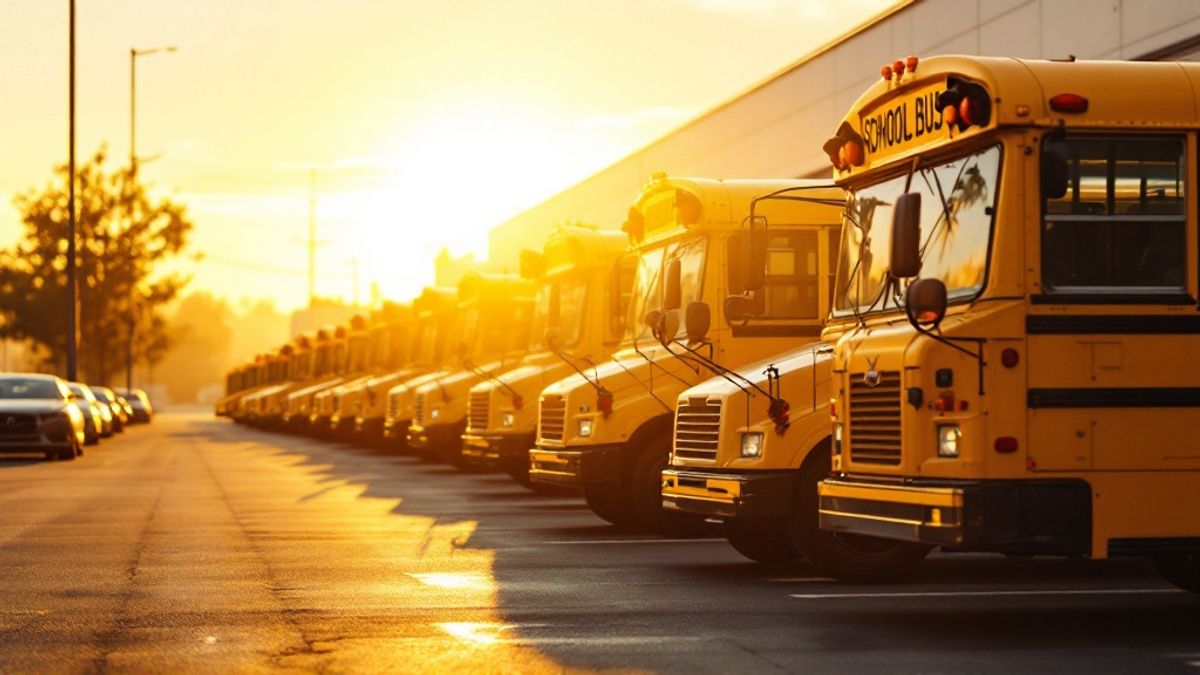
EPA money moved 440 propane school buses across three rounds; Missouri put up $970,000 of its own. None of it buys a fueling island — which is the line the marketer usually carries, and the reason the account renews.
The Facts
On a Thursday afternoon in late July, county officials in Angelica, New York, cut a ribbon at the Allegany County Fairgrounds. The vehicle behind them was a transit bus. The news was the fuel.
ACCESS Allegany, the county's public transportation service, converted its fleet to propane autogas — the first public transit system in New York State to do it, according to reporting in the Olean Times Herald and The Wellsville Sun. The buses came out of Penn Yan, about ninety minutes up the road. The fuel systems came from ROUSH CleanTech. Ferrellgas supplies the propane. The service runs more than 50,000 trips a year across Allegany and Cattaraugus counties, and the county projects fuel costs will drop more than 40% against gasoline — north of $80,000 a year, per the Times Herald's account of the county's figures.
That is a small fleet in a rural county. It is also a fair snapshot of where autogas adoption actually sits in 2026: not a wave, but a steady accumulation of fleets that run fixed routes, sleep in the same yard every night, and can do arithmetic.
The school-bus side is where the volume is. In March, Prince William County Public Schools in Virginia rolled out 62 Blue Bird Vision Propane buses — the district's first propane units, following a six-week demonstration, Butane-Propane News reported. Each is a 72-passenger body on a Ford 7.3-liter V8 with a ROUSH CleanTech fuel system, and each carries an IMMI 4Front driver airbag as standard equipment, which Blue Bird says is an industry first on a school bus. Automotive World covered the same delivery. Sixty-two buses is not a pilot. That is a garage committing to a fuel.
Smaller districts move the same way with less noise. Kingston Community School District in Michigan leased six Blue Bird buses with ROUSH CleanTech propane engines and now runs its routes entirely on propane, School Bus Fleet reported. Livonia Public Schools, also in Michigan, added 22 propane buses using Volkswagen settlement money administered by the state's Department of Environment, Great Lakes, and Energy.
That last detail is worth sitting with, because it explains a lot about the pace.
The grant math nobody puts in the press release
Alternative-fuel bus purchases in this country are largely shaped by which pot of money a district can reach. The federal Clean School Bus Program has been the biggest pot. Across three rounds, EPA allocated more than $2.8 billion for 8,427 electric school buses and 440 low-emissions propane buses, according to School Bus Fleet's tally. In the June 2024 round alone, 58 districts were tentatively selected for 269 propane autogas buses, backed by more than $6.7 million — figures the Propane Education & Research Council announced at the time.
Run those two numbers against each other and the reason autogas keeps showing up in transportation-director budget memos gets obvious. Propane buses cost a fraction per unit, so a fixed appropriation replaces far more diesel iron. Several states have written that logic directly into their own programs: Missouri's Department of Elementary and Secondary Education administers a dedicated propane school bus grant, funded with $970,000 the General Assembly appropriated in 2024, aimed at local education agencies replacing older buses.
None of that money buys a fueling island, though. And that is the part that decides whether the second order ever happens.
The dispenser is the deal
A fleet that returns to base is the whole autogas thesis. Central fueling is why the fuel works for school routes, paratransit, last-mile delivery, and municipal light-duty — and it is also the capital line that a transportation director has to defend to a school board that just wants buses.
Retailers who have supplied these accounts describe the same sequence every time. The tank and dispenser go in on the district's property, often on the marketer's dime under a multi-year fuel agreement. The district trains its own drivers to fuel. The marketer picks up a year-round, weather-independent, predictable-volume account that does not care what happened to heating degree days last winter — the closest thing to a base load a propane business can buy.
The vehicle economics get the headlines. The infrastructure economics get the renewals.
Which is what makes Allegany County's ribbon-cutting more interesting than its size suggests. A transit agency running 50,000 trips a year across two rural counties is not chasing an emissions target set in Albany. It is a fleet that found a fuel it could dispense at its own yard, from a supplier ninety minutes away, at a number its legislature could see on one page.
The buses in Prince William County and the vans in Angelica have almost nothing in common except that. Somebody had to put in a tank first.
Action Steps
- 1.List every fixed-route fleet in your service radius that sleeps in one yard — school districts, paratransit, last-mile, municipal — and take three questions to each: what routes do they run, what would a yard tank and dispenser cost under a multi-year fuel agreement, and which grant pot is open to them this cycle?
Get the next one in your inbox.
Free propane industry news, twice a week. 30,000+ operators already read it.
No spam, unsubscribe anytime. We'll email you a link to confirm — that's how we keep the list real. Cloudflare processes a short bot-check token on this form. See our privacy policy.
Published by PropaneInsider.com
AI-powered propane industry news for 30,000+ professionals
Propane Insider is published by the makers of Tank Spotter, Custom Fuel App, Blink Fuel, PIMS and Propane Safety Pro; some links go to advertisers.