
11 Hours Without Power: Why Generators Still Sell
A quiet hurricane forecast, a loud grid
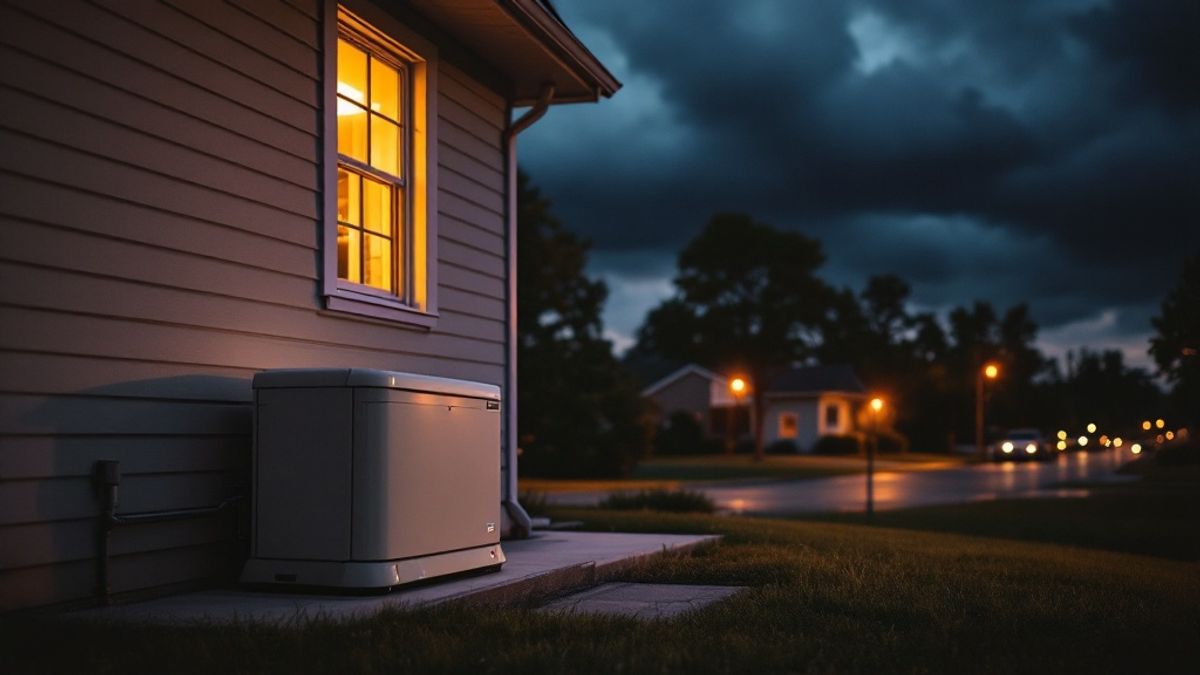
Forecasters call for one of the slowest Atlantic seasons on record — 9 named storms against a 14.4 average. But EIA says the average U.S. customer lost 11 hours of power in 2024, nearly double the prior decade, and ERCOT set a 91 GW record in July.
The Facts
Colorado State University's seasonal forecast team is calling for a slow Atlantic year. Its 2026 numbers put the basin at 9 named storms, 4 hurricanes and 1 major hurricane, against a 1991–2020 average of 14.4, 7.2 and 3.2. Accumulated cyclone energy — the metric that folds storm strength and duration into one figure — is forecast at 50, less than half the 123 long-term average.
A propane retailer reading only that page would plan a thin generator season.
The retailers booking installations this summer are reading a different page. Outage risk in the United States has been migrating inland and away from the tropics, toward heat, load growth and an aging distribution system, and the customer conversation has followed it. The single stat behind most of those conversations is not a forecast at all. It is a memory.
The baseline customers remember
The U.S. Energy Information Administration reported in December that U.S. electricity customers went without power for an average of 11 hours in 2024 — "nearly twice as many as the annual average experienced in the decade before." Hurricanes Beryl, Helene and Milton accounted for 80% of those hours. Strip out major events and the picture is dull and stable: routine interruptions, EIA noted, "routinely average about two hours per year." Major-event hours are where the volatility lives, averaging close to nine hours in 2024 versus roughly four annually across 2014 through 2023.
That is the number sitting in a homeowner's head when a retailer's salesperson knocks. Two years is not long enough to forget a five-day outage in September.
Load records, not landfalls
This summer supplied a fresh set of reminders that had nothing to do with a storm track.
ERCOT, which runs the grid for most of Texas, set a new hourly peak load record on July 22, exceeding 91 GW, according to EIA. Farther east, Utility Dive reported PJM anticipating a new peak demand record of its own as a late-June heat wave tested the largest grid operator in the country. Neither event produced a mass outage. Both produced headlines, conservation alerts and a week of local news coverage about whether the lights would stay on — which, from a standby-power sales perspective, is the same thing.
The reliability planners were more measured. NERC's 2026 Summer Reliability Assessment projected adequate resources across all assessment areas under normal summer conditions while flagging elevated risk in New England and the Northwest under once-in-a-decade extreme load. Even that got pushback. In a July 6 review, Adria E. Brooks of Grid Strategies supplemented NERC's assessment with interconnection-queue data from Lawrence Berkeley National Laboratory and concluded that both regions look adequate under extreme conditions too, with every region carrying "between 5% – 93% more reserves than their target reserve margin."
Planners argue about reserve margins. Customers watch the thermostat and the news. Retailers sell into the second group.
What it changes for a retail operation
The mechanics of the resilience business do not resemble a heating route, and that is where the season gets won or lost.
Timing is the first divergence. Generator work is front-loaded — permits, gas piping, an electrician, a concrete pad, and in most markets a lead time on the unit itself. A customer who calls the week a watch is posted is a customer for next year at best. Retailers who treat June and July as the install window rather than the panic window are the ones with tanks set before the weather turns.
The second divergence is the sale itself. Butane-Propane News has framed the industry's gallon growth as a question of breaking into new sectors — standby power, combined heat and power, commercial prime power — rather than deepening existing residential accounts. Those sectors reward a different skill set. Sizing a system means asking what the customer actually intends to run during an outage, what the storage has to cover for a realistic outage length, and who maintains the unit in year three. A retailer who answers only "we'll keep it full" is competing on delivery, and delivery is the easiest part of the job to take away.
Third: fuel logistics are the argument, and they are strongest when nobody makes them loudly. Gasoline supply collapses in a regional emergency because it depends on stations having power and inventory at the exact moment neither is guaranteed. A tank in the side yard was filled last month.
Geography still shapes the pitch. Gulf and Southeast operators sell against storm memory. New England and Northwest retailers now have a federal reliability assessment naming their regions, which is an unusual asset for a sales conversation. Everywhere else, the driver is load growth, data-center interconnection and the plain fact that distribution poles are older than the people paying to keep them standing.
None of it is on the hurricane forecast. The quiet Atlantic year CSU is projecting may well arrive on schedule, and the standby generators will keep going in anyway — because customers are not buying against the season ahead. They are buying against the last time the power went out.
Action Steps
- 1.Treat June and July as the install window, not the panic window: review your generator pipeline now, ask each prospect what they actually intend to run during an outage, and map which of your accounts sit in the regions the reliability assessments name.
Get the next one in your inbox.
Free propane industry news, twice a week. 30,000+ operators already read it.
No spam, unsubscribe anytime. We'll email you a link to confirm — that's how we keep the list real. Cloudflare processes a short bot-check token on this form. See our privacy policy.
Published by PropaneInsider.com
AI-powered propane industry news for 30,000+ professionals
Propane Insider is published by the makers of Tank Spotter, Custom Fuel App, Blink Fuel, PIMS and Propane Safety Pro; some links go to advertisers.