
The Code Edition Your Inspector Reads Changes January 1
Federal rules catch up to the 2024 LP-Gas code
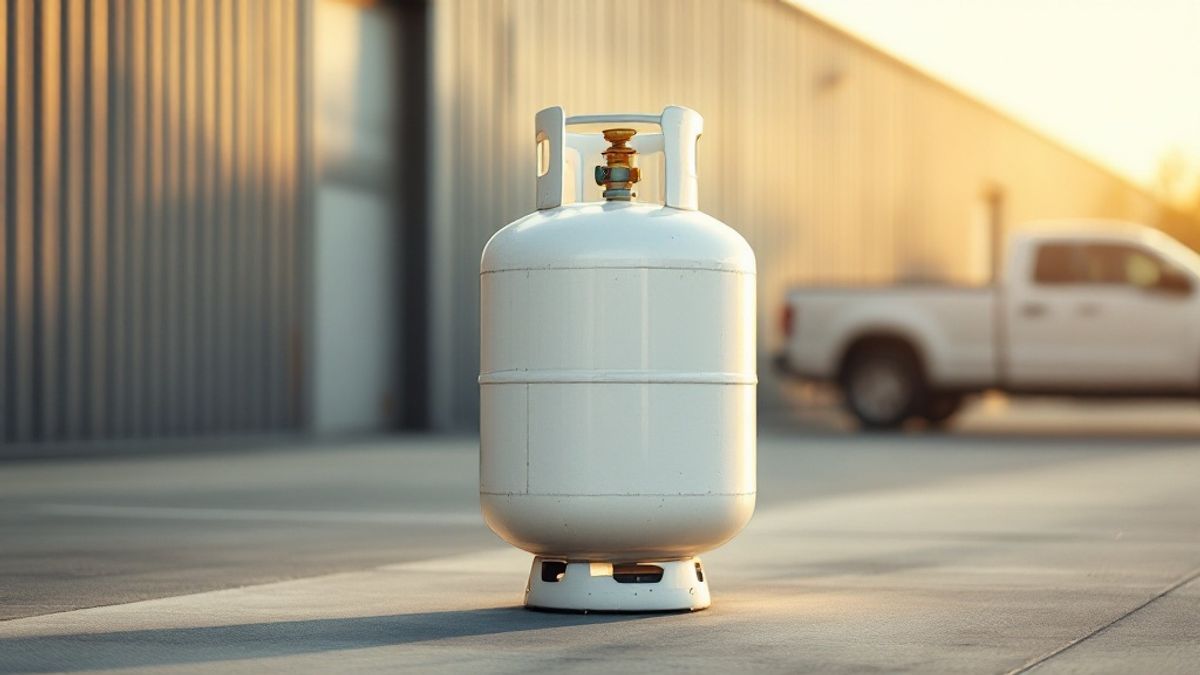
PHMSA's pipeline rules will point to the 2024 edition of NFPA 58 starting January 1, 2027 — a swap that lands hardest on community systems, mobile-home-park distribution and vapor-mix plants. A separate cylinder rule takes effect September 3.
The Facts
It ran on page 48300, under a headline no one reads twice: "Pipeline Safety: Standards Update—NFPA 58." Two paragraphs of substance, signed by PHMSA Chief Counsel Keith J. Coyle, filed at 8:45 a.m. on July 30. What it settles is not small. As of January 1, 2027, the federal pipeline safety regulations at 49 CFR part 192 will incorporate the 2024 edition of NFPA 58, the Liquefied Petroleum Gas Code, replacing a reference to the 2020 edition that has been in place since August 25, 2019.
The mechanism is worth understanding, because it explains why almost nobody saw this coming. PHMSA published the change as a direct final rule on April 24, 2026, at 91 FR 21986 — a procedure set out at 49 CFR 190.339 for changes the agency expects to be uncontroversial. Under that procedure the rule takes effect on schedule unless someone files an adverse comment worth acting on. In its July 31 notice, PHMSA said it "did not receive any comments that warranted withdrawal of the DFR." Silence carried it across the line.
Who the reference actually reaches
Part 192 is the natural gas pipeline safety rulebook, and the section doing the work here is § 192.11, "Petroleum gas systems." Per the current text at eCFR, it covers two populations: any plant that supplies petroleum gas by pipeline into a natural gas distribution system, and any pipeline system under that part that transports only petroleum gas or petroleum gas/air mixtures.
Subsection (c) is the sleeper. Where part 192 and NFPA 58 conflict, § 192.11 says the NFPA standard prevails, if it applies. That makes the edition on file a live compliance question rather than a bibliographic one, and it puts the burden on operators of LP-gas distribution systems and vapor-mix plants to know which edition their inspector will be reading from next January.
A second date on the hazmat side
PHMSA published a second, unrelated final rule on August 4, 2026 under docket PHMSA-2025-0103 (HM-268O), adopting the provisions of DOT special permit 14175 into 49 CFR part 180. The rule authorizes a 10-year requalification period and the ultrasonic examination method for DOT specification 3A and 3AA cylinders in flammable and non-flammable, nonpoisonous gas service. PHMSA's stated rationale: the change "reflects advances in testing technology and will relieve stakeholders of the burden of performing more frequent cylinder requalification." It takes effect September 3, 2026.
Read the specification numbers before you read the headline. The rule names DOT 3A and 3AA cylinders, which are drawn without a welded seam. Marketers filling and exchanging the welded steel cylinders that dominate barbecue, forklift and commercial service should not assume the new ten-year clock reaches their inventory; the requalification schedule that applies to a given cylinder's specification still governs it. Two federal actions in one week, two entirely different populations of equipment.
The code is already moving again
None of this freezes anything. NPGA noted in a January 2024 industry-news item that the 2024 editions of NFPA 58, NFPA 54 and NFPA 59 had each already entered their next development cycle, with public proposals on NFPA 58 accepted through a June 4, 2025 deadline. By the time the federal citation to the 2024 edition takes effect on New Year's Day, the committee work on its successor will be well advanced.
That lag is structural, not sloppy. A consensus code revises on a three-year rhythm; a federal incorporation by reference revises when an agency spends the rulemaking to move it, and this one took roughly two years from the code's printing to its effective date in part 192. Operators live in the gap. The practical move for anyone inside § 192.11's scope is a straightforward one — pull the 2024 edition now, compare it against the 2020 copy on the shelf, and find out over the next five months whether the delta touches anything you actually do.
Action Steps
- 1.Operators inside the scope of 192.11 should pull the 2024 edition now and compare it against the 2020 copy on the shelf before January 1.
Get the next one in your inbox.
Free propane industry news, twice a week. 30,000+ operators already read it.
No spam, unsubscribe anytime. We'll email you a link to confirm — that's how we keep the list real. Cloudflare processes a short bot-check token on this form. See our privacy policy.
Published by PropaneInsider.com
AI-powered propane industry news for 30,000+ professionals
Propane Insider is published by the makers of Tank Spotter, Custom Fuel App, Blink Fuel, PIMS and Propane Safety Pro; some links go to advertisers.