
A Cedarburg Shed Explosion Puts Outbuilding Propane Installs Back on Your Service List
Safety
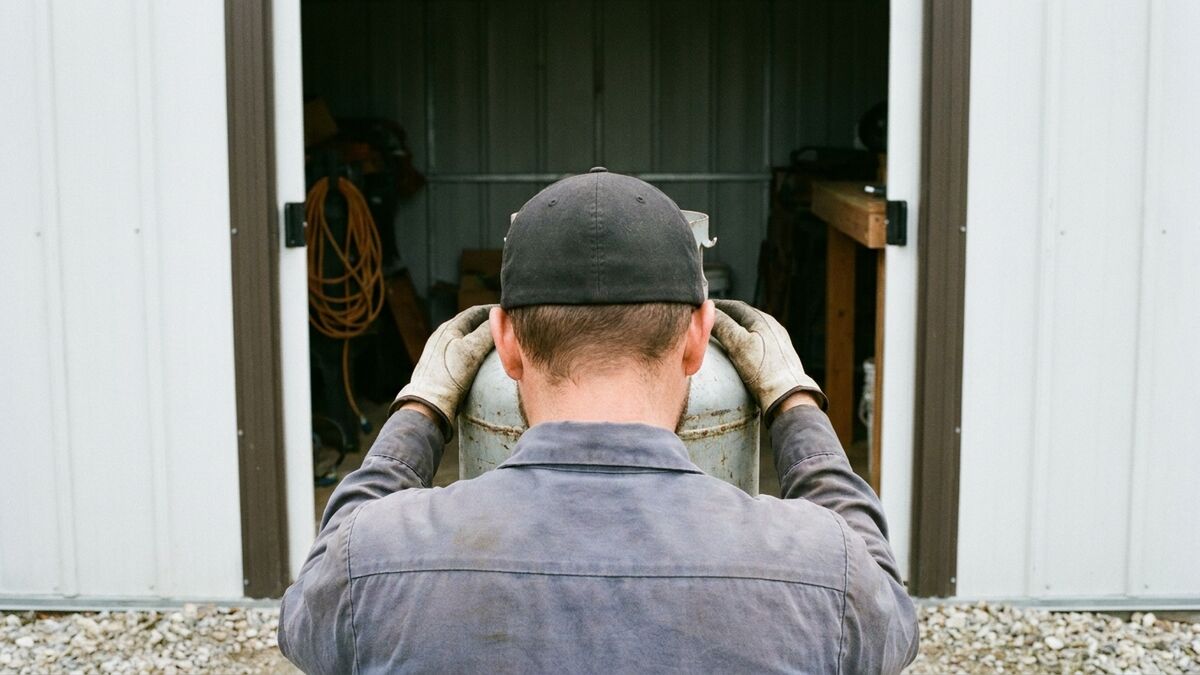
A July 25 explosion destroyed a metal outbuilding in the Town of Cedarburg, Wisconsin, critically burning two men; TMJ4 News reported investigators ruled it accidental with a propane tank a suspected contributor. The cause remains under investigation.
The Situation
A blast inside a metal outbuilding in the Town of Cedarburg, Wisconsin, on July 25 destroyed the structure and sent two men to a Milwaukee burn center with critical injuries, TMJ4 News reported. Investigators ruled the explosion accidental and believe a propane tank may have contributed, though the exact cause has not been established and the investigation remains active. For propane operators anywhere in the country, the detail worth sitting with is the setting: a detached outbuilding, the class of structure that sits at the edge of most service files and gets inspected least.
The Facts
What investigators have said
Ozaukee County dispatch took multiple calls at roughly 11:48 a.m. on July 25, 2026, reporting an explosion in the 2300 block of Brandt Drive in the Town of Cedarburg, according to TMJ4 News in Milwaukee. Deputies arrived seven minutes later. The blast happened inside a metal shed-type outbuilding, and the structure was a total loss. TMJ4 identified the two injured men as Michael Foeger, 54, and Karl Foeger, 82. Both were taken to Ascension Columbia St. Mary's Regional Burn Center in Milwaukee and were listed in critical but stable condition as of Sunday, July 26. Investigators determined the explosion was accidental. Authorities believe a propane tank may have contributed. The exact cause has not been definitively established, and the investigation is still open.
What has not been reported carries just as much weight for anyone reading this as a lesson. Nothing in the reporting establishes whether the container was a DOT cylinder or an ASME tank, whether it sat inside the building or outside it, what it was feeding, where gas escaped, or what ignited it. No code violation has been alleged. An operator who fills in those blanks at the counter on Monday morning is guessing out loud, and guesses travel further than corrections.
The outbuilding gap
Detached structures are where propane quietly drifts out of the service record. The house has a tank, a regulator, a leak-check date, a signed lease. The shop behind it has a chest freezer, a battery charger, a welder, a drop light, and whatever heating arrangement the customer improvised three winters ago. It is enclosed enough to hold a leak and crowded enough to ignite one. Customers rarely think of a barn or shed as a room, so they do things there they would never do in a kitchen: run a grill cylinder to a space heater, thread a flexible connector through a doorway, park a cylinder next to the compressor that cycles all day. Combustion appliances in enclosed spaces also raise carbon-monoxide risk — encourage CO alarms in any outbuilding with a fuel-burning appliance.
Three levers a company actually controls
Placement first. Containers and the appliances they serve belong in the locations the manufacturer's instructions and the applicable codes call for, which for most residential-scale equipment means outdoors with piping run to the appliance. Codes and manufacturer instructions do not replace a conversation with your authority having jurisdiction — confirm the requirement that governs the specific install before a tech signs anything off.
Condition second. Equipment on a farm or in a shop takes abuse the equipment on a suburban side yard never sees: vehicle and forklift contact, UV breakdown on exposed components, rodent-chewed connectors, improvised or non-listed parts. Drivers and service techs are the early-warning network, and they only work if the company gives them permission to slow down. Evidence a container has been dragged or struck, an unprotected regulator, a kinked hose, a cylinder tucked beside a doorway — each one earns a stop and a note.
Third, the customer script, taught the same way every time. Teach PERC's published sequence: put out smoking materials and other open flames, and don't operate lights, appliances, telephones or cell phones; get everyone out immediately; shut off the main gas supply valve on the tank if it is safe to do so; then, from a neighbor's home or another nearby building, call your propane retailer — and if you can't reach them, call 911 or the local fire department. Nobody returns until the retailer, an emergency responder or a qualified technician says the area is safe, and the system gets checked before any appliance runs again. That order is the whole point of the script.
Documentation is the shield
An explosion anywhere in a 30-to-35-mile service radius pulls attention toward whoever delivers the gas — and a documented file is both your fastest answer and your strongest defense. The first question is always what the supplier knew and when. Dated leak-check records, signed delivery and service tickets, a note in the file that a tech flagged a shed installation and what the customer chose to do about it, a record that leak-response instructions were handed over and to whom — that file is what separates a company that answers the question in an afternoon from one that answers it under oath. Build it before you need it, because you cannot backdate a conversation nobody wrote down.
This overview does not replace applicable codes, manufacturer instructions, or your authority having jurisdiction.
Business Impact
For a family-owned company running a handful of trucks, the exposure from an incident on a customer property is rarely the repair bill. It is the hours: an owner off the route answering an investigator, a service manager reconstructing two years of visits from memory, an attorney billing while somebody digs through paper tickets. Second-order, insurance-renewal pricing hardens when a carrier finds no inspection trail. Third, any local news coverage on a propane event moves the phones — a company with dated records answers in one call; one without them spends weeks chasing the story.
Key Takeaways
- Investigators ruled the Cedarburg explosion accidental and suspect a propane tank contributed, per TMJ4 News, but the cause is unestablished — so any operator repeating a specific cause is spreading a guess that can be quoted back at them.
- The blast occurred inside a detached metal outbuilding, the structure class least likely to appear in a service file, which means the accounts with the thinnest documentation are the ones with the loosest installs.
- Enclosed outbuildings combine gas accumulation space with dense ignition sources — freezers, chargers, welders, unvented heaters — so a leak that would disperse outdoors has somewhere to collect and something to meet.
- Neither NFPA 58 nor NFPA 54 answers a specific job site by itself; confirming the governing requirement with the AHJ is what protects the tech who signs the ticket.
- Dated inspection records and a documented leak-response handoff turn a post-incident inquiry into an afternoon of paperwork instead of months of reconstruction.
Action Steps
- 1.Pull every account in your book with a barn, shop, shed or detached garage and flag it for a physical look at the next scheduled delivery.
- 2.Add two fields to the delivery ticket this week: outbuilding present yes/no, and propane observed in or adjacent to it yes/no.
- 3.Brief drivers and techs on the four stop-and-note triggers — struck or moved containers, unprotected regulators, worn or kinked connectors, containers stored in doorways and walk paths.
- 4.Re-teach the leak script company-wide using PERC's published sequence: flames and smoking materials out, no switches or phones; everyone out immediately; shut the tank's main supply valve only if safe; call us from a neighbor's or another nearby building — and if you can't reach us, call 911 or the fire department; nobody returns until we, an emergency responder or a qualified technician clears the area.
- 5.Confirm with your AHJ how NFPA 58 and NFPA 54 requirements apply to the outbuilding installs you actually serve before a tech signs off on one.
- 6.Set a monthly file check that every leak-check, service refusal and safety-literature handoff has a date, a name and a signature attached.
Competitive Advantage
Companies that document outbuilding installs answer hard questions with a file instead of a memory. Start this week: pick ten accounts with a detached shop or shed, walk their records, and note every one missing a dated leak check or a signed safety handoff.
How many accounts in your book have propane at a detached shed or shop, and when did a tech last look at one?
Get the next one in your inbox.
Free propane industry news, twice a week. 30,000+ operators already read it.
No spam, unsubscribe anytime. We'll email you a link to confirm — that's how we keep the list real. Cloudflare processes a short bot-check token on this form. See our privacy policy.
Published by PropaneInsider.com
AI-powered propane industry news for 30,000+ professionals
Propane Insider is published by the makers of Tank Spotter, Custom Fuel App, Blink Fuel, PIMS and Propane Safety Pro; some links go to advertisers.