
A Gas Producer Just Bought New England's Largest Propane Terminals. Three Questions Before You Sign for Winter
A Gas Producer Just Bought New England's Largest Propane Terminals. Three Questions Before You Sign for Winter
The Facts
The transaction
EQT Corporation completed its acquisition of all the operating subsidiaries of Blackline Midstream, LLC on July 21 for $77 million, according to the second-quarter results release EQT issued that same day.
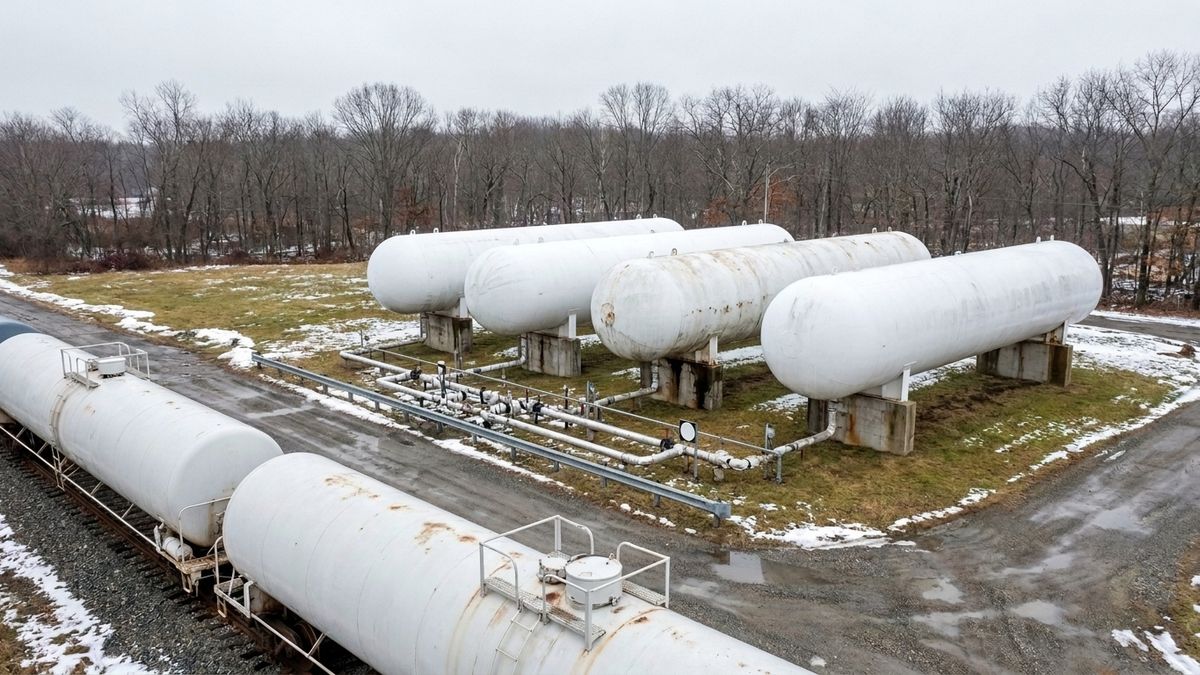
What changed hands, per that release: two propane storage and distribution terminals in New England, which EQT describes as the largest propane facilities in the region, with rail, waterborne and retail access. The release puts their combined storage at 46 million gallons.
Then comes the line worth reading twice. EQT states in the same release that it currently supplies approximately 60% of Blackline's propane volumes. The molecules were already the producer's. Now the tank farm is too.
Vertical integration, in the company's own words
EQT is an Appalachian natural gas producer — upstream, by every conventional description of the business. An upstream company taking ownership of downstream storage sits differently than a midstream operator adding one more node to a network it already runs.
The stated rationale is not vague. In its July 21 release, EQT says the assets strengthen its vertical integration strategy by improving propane logistics, pricing flexibility and market access, and that they provide optionality for its propane production, improve flow assurance, enhance its ability to optimize pricing, and create additional commercial opportunity through domestic and international supply channels. EQT puts the purchase at roughly a 20% free cash flow yield with essentially no incremental capital required.
Read that list from the other side of the counter — the buying side, where a retailer stands. "Optimize pricing" and "international supply channels" are a supplier's phrases for flexibility. Flexibility upstream is a variable downstream.
None of that makes the deal bad news for retailers. A well-capitalized owner with a producer's supply behind it can be a steadier counterparty than a thinly financed one. The point is narrower: the terms at a major regional storage point are now set by a company whose primary business is producing the gas, not serving the accounts that load there.
What the release does not address
Start with the limits. A quarterly earnings release is written for shareholders, and this one behaves accordingly. It does not address what happens to existing third-party supply agreements at those terminals, whether posted hours or loading procedures change, or how allocation priority gets set in a tight month.
Those are the only three things a retail owner actually needs to know, and none of them appear in a financial disclosure. Anyone who tells you what this does to your January allocation is guessing.
Why the questions have to come from you
A change of control at a storage point rarely announces itself to the people who load there. It shows up later, in a renewal letter, a revised fee schedule, or a February phone call about allocation. The retailers who handle it well are the ones who asked early, while the answers were cheap.
So the three questions below belong in your next supply meeting, not in a file. Take them in on paper.
Bring these three to your supplier — and write down the answers
1. Name the owner of every rack you load at. Ask for it by legal entity, not by the sign on the gate, and get it for your secondary point as well as your primary. That secondary rack — the one you only touch during a cold snap — is exactly the one that matters when the primary goes to allocation. Most owners can answer for the primary off the top of their head. Do not stop there.
2. Pin the renewal date, and ask whether a change of control opens the agreement early. The date is in your contract. Pull the contract, find it, write the month at the top of page one, and put it on the calendar with a 60-day warning. Then ask the supplier to confirm it matches their records, because the two do not always agree.
3. Ask how much of their book is export-exposed, and what that does to your ratable take in a cold week. That question used to sound theoretical. EQT's own release names international supply channels as part of the commercial case for buying the terminals, which is as clear an invitation to ask as a retailer is going to get. Put it in writing, keep the reply, and do it before you commit to fall volumes rather than after.
Work through all three before you sign anything this fall. Call your secondary supply point first, ahead of your primary, because that is the relationship you have neglected. Set aside one afternoon in August for it, and the three signatures you give this season will be better informed than the ones you gave last.
Heating-assistance funding is moving too — NEADA has asked Washington for more LIHEAP money, and another article in this edition takes that up, since it lands in the receivables conversation rather than this one.
Winter gets decided by a supply contract signed in August, by an owner who spent July finding out who owned the rack.
Business Impact
A change of control at a major regional storage point can reset renewal terms, loading access, and allocation priority; the owner who documents rack ownership and renewal dates before signing an August supply contract keeps leverage over winter delivery capacity, while the one who discovers the change in January negotiates from the short end.
Action Steps
- 1.Ask your supplier, by legal entity, who owns each supply point in your book.
- 2.Pull your supply contract, write the renewal month on page one, and calendar a 60-day warning.
- 3.Ask in writing how much of the terminal's volume is export-exposed, and keep the reply.
Do you know who owns the rack your bobtails load at — and the month that agreement comes up for renewal?
Get the next one in your inbox.
Free propane industry news, twice a week. 30,000+ operators already read it.
No spam, unsubscribe anytime. We'll email you a link to confirm — that's how we keep the list real. Cloudflare processes a short bot-check token on this form. See our privacy policy.
Published by PropaneInsider.com
AI-powered propane industry news for 30,000+ professionals
Propane Insider is published by the makers of Tank Spotter, Custom Fuel App, Blink Fuel, PIMS and Propane Safety Pro; some links go to advertisers.