
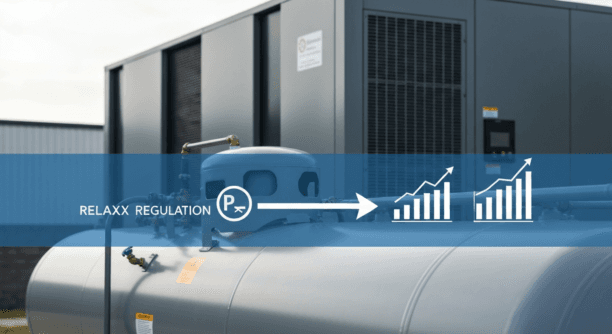
Federal Refrigerant Rollback and State-Level Policy Wins Could Create a More Stable Business Climate for Propane Companies
A series of recent policy changes at both the federal and state levels is signaling a meaningful shift for the propane industry. For propane retailers, delivery operators, and equipment suppliers, the message is becoming clearer: regulators are placing greater emphasis on affordability, energy reliability, and consumer choice.
The latest example came from Washington, where the Trump administration announced plans to ease portions of a federal refrigerant rule that would have tightened restrictions on hydrofluorocarbons (HFCs) beginning in 2026. At the same time, several states are advancing legislation viewed as favorable to propane and other traditional fuel sources. For small and mid-sized propane businesses, these developments could translate into fewer regulatory headaches, more predictable operating conditions, and stronger long-term demand.
Why the Refrigerant Rule Matters
The original federal rule targeted HFC refrigerants commonly used in cooling and HVAC systems. Supporters argued the restrictions would reduce emissions, but many business groups warned the transition would increase equipment costs for contractors, distributors, and consumers.
Under the revised approach, regulators are emphasizing affordability and a slower transition timeline. That matters to propane companies because many of them serve customers who rely on propane-powered heating systems, backup generators, agricultural drying equipment, and commercial HVAC applications. For contractors and fleet operators already dealing with rising labor, insurance, and transportation costs, avoiding another wave of expensive equipment upgrades is welcome news.
One propane marketer in the Midwest summed it up this way:
“Customers are already watching every dollar. Any policy that keeps equipment costs manageable helps everyone in the supply chain.”
States Are Also Rewriting Energy Rules
This policy movement is not limited to Washington. Several states have recently introduced or passed legislation designed to preserve fuel choice and limit aggressive electrification mandates. In Michigan, lawmakers approved House Bill 4486, a measure widely viewed by the propane industry as a significant win for maintaining propane access in residential and commercial markets.
Across the country, propane associations are becoming more active in state legislatures as debates intensify over building codes, emissions rules, and energy infrastructure planning. For propane companies, these battles are more than political headlines — they directly affect customer-related growth opportunities.
If local governments restrict gas appliances or tighten permitting requirements, propane marketers could lose future business in housing developments, rural communities, and commercial projects. On the other hand, policies that protect energy choice help preserve market stability and support long-term investment.
What This Means for Propane Businesses
For short-haul propane delivery companies and local retailers, the changing regulatory climate presents several practical advantages such as:
1. More Confidence to Invest
When regulations become more predictable, companies can make longer-term decisions about trucks, storage facilities, routing technology, and customer expansion. That stability matters especially for family-owned operations that cannot absorb sudden compliance costs as easily as large national corporations.
2. Stronger Position Against Electrification
Propane continues to market itself as a reliable, lower-emission energy option that works independently of the electric grid. As policymakers reconsider the cost and practicality of rapid electrification, propane businesses may find more opportunities in residential heating, backup power, agriculture, and commercial applications.
3. Better Customer Messaging
Consumers increasingly care about affordability and energy reliability. Propane companies that clearly communicate cost stability, energy independence, and dependable service may strengthen customer loyalty during periods of economic uncertainty.