
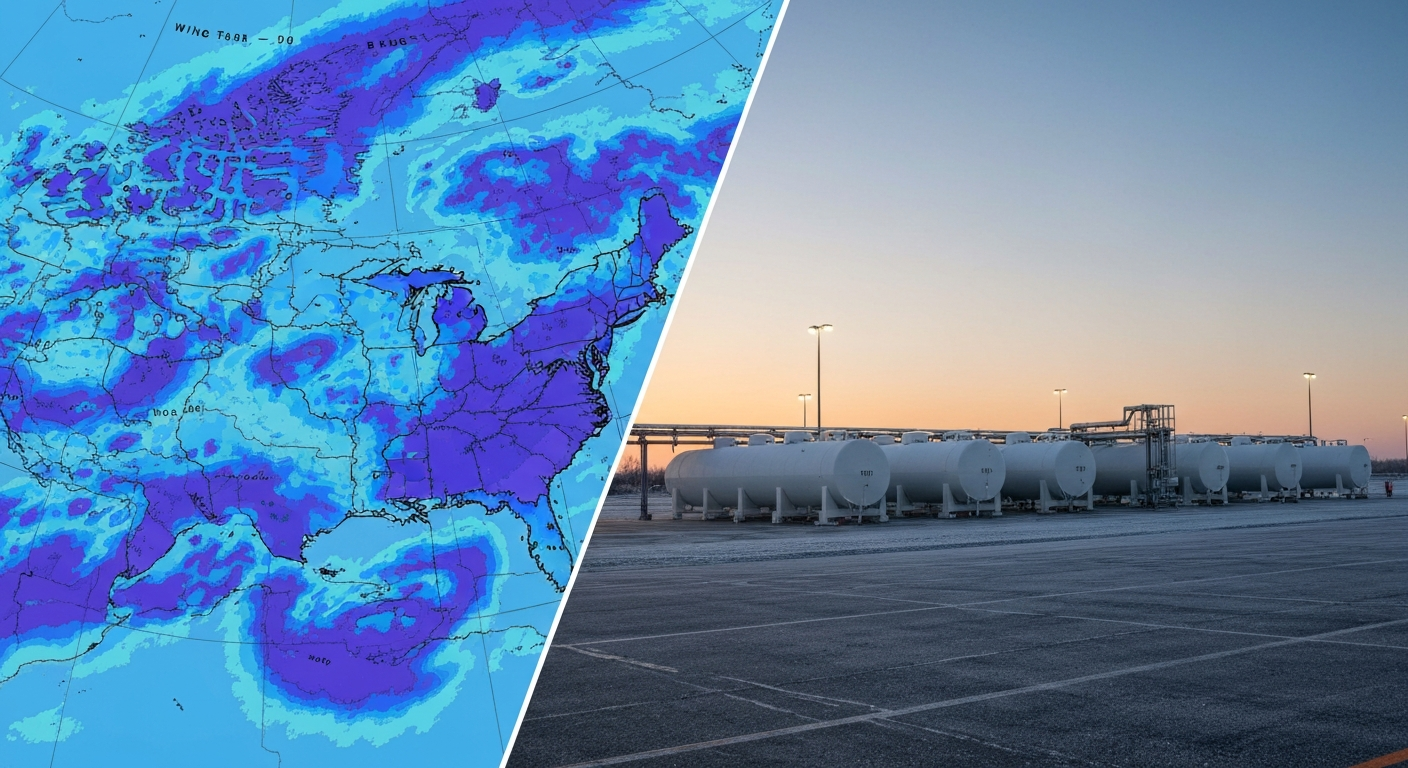
La Niña conditions have historically correlated with colder, more expensive winters for the propane market. Storage discipline and early pre-buy positioning are the standard hedge.
The Situation
La Niña conditions have historically correlated with colder, more expensive winters for propane retailers in the northern tier and Upper Midwest. NOAA’s Climate Prediction Center tracks this pattern every season, and retailers who have been through a cold La Niña winter before know how quickly a thin storage position turns into a real cost problem once temperatures drop.
The Facts
### The Weather Signal
La Niña winters have a well-documented track record of running colder across the Upper Midwest and interior Northeast, which is why propane retailers in those regions treat a La Niña signal as a real planning input, not background noise.
### Inventory Position
Propane storage heading into the heating season tends to run tighter in a La Niña year, as retailers and marketers pull barrels forward ahead of expected demand. Pre-buy interest typically picks up earlier than usual once the pattern firms up. Retailers who lived through a cold La Niña winter before know how fast a thin storage position turns into a real cost problem once the temperature drops.
Business Impact
A colder-than-normal winter means more gallons delivered and tighter margins if supply contracts aren’t locked in ahead of time. Retailers without firm trucking and supply commitments going into a cold stretch are the ones who end up eating spot-market surcharges when demand spikes.
Key Data Points
-
La Niña conditions have historically correlated with colder winters in the propane-heavy northern tier.
-
Storage tends to run tighter heading into a La Niña winter.
-
Pre-buy interest typically picks up ahead of a La Niña season.
-
A cold snap without firm supply contracts in place is where retailers get hurt on spot pricing.
Key Takeaways
-
La Niña winters have historically run colder in the Upper Midwest and interior Northeast — worth planning around, not ignoring.
-
Storage positioning matters more in a La Niña year than a typical one.
-
Locking in supply and trucking commitments early is the standard hedge against a cold-snap price spike.
-
Two mild winters in a row doesn’t mean the pattern is broken.
Action Steps
-
Review your winter supply contracts now, before the cold sets in.
-
Confirm firm trucking commitments for the peak delivery months.
-
Talk to customers about pre-buy and budget plan options before the season turns.
Competitive Advantage
Proactive winter preparation outreach — such as a customer letter explaining the pattern and recommending pre-buy options — positions you as a trusted advisor, while competitors remain silent.
Are you buying aggressively now or waiting for the season to confirm the pattern? What’s your trigger point for action?