
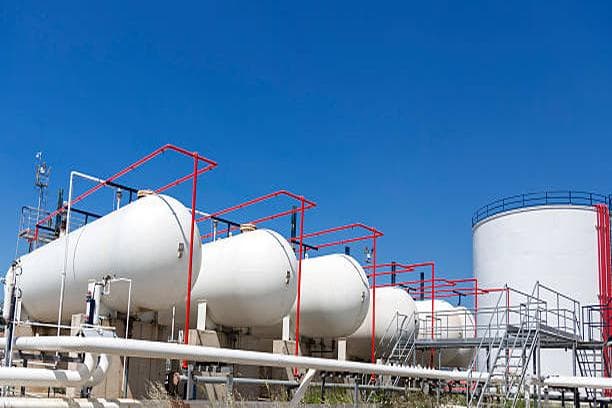
As the production of oil and natural gas continues to surge in the United States, there has been a notable rise in the production of natural gas liquids (NGLs) such as propane, ethane, and butane. The U.S. now stands as a major global supplier of propane and other NGLs, with a substantial increase in demand both from consumers and various industrial applications.
Among the NGLs, propane, in particular, has experienced robust global demand due to its versatile applications in both consumer and industrial sectors. This burgeoning demand has opened up significant growth opportunities for midstream corporations and master limited partnerships (MLPs) to capitalize on by enhancing their processing and export capacities.
Propane, often recognized as a popular fuel for grills and patio heaters, is more than just a convenient energy source. It plays a crucial role as a vital petrochemical building block. Together with other NGLs, propane has become an essential driver of growth for midstream companies, especially with the rising global demand for petrochemical applications.
Strong Fundamentals Support U.S. Propane:
Propane is one of the five NGLs, the others being ethane, butane, isobutane, and natural gasoline. These NGLs are co-produced alongside oil and natural gas at well sites and are later separated from the natural gas stream at gas processing facilities. Fractionation plants then process NGLs into their individual components, such as propane, ethane, and butane. Midstream companies are instrumental in owning and operating these gas processing plants and fractionators. Despite recent fluctuations in NGL prices, the long-term fundamentals for these products remain promising.
Over the years, U.S. propane production has experienced substantial growth, nearly doubling since 2014 to reach 1.9 million barrels per day (MMBpd) in tandem with the overall growth in oil and natural gas production. Simultaneously, propane exports have more than tripled to 1.4 MMBpd over the same period. According to the Energy Information Administration (EIA), U.S. propane exports achieved a record high of 1.7 MMBpd in March 2023. As per the EIA’s projections, propane production is expected to grow moderately while exports continue to rise in 2023 and stabilize in 2024. However, with the increasing global demand, especially from Asian markets, companies are considering augmenting their propane export capacity to meet the growing needs.
Global Propane Demand Driven by Petrochemicals:
The surge in global demand for plastics is a primary driver behind the increasing need for propane, alongside ethane. Propane dehydrogenation (PDH) units play a vital role by converting propane into propylene, a petrochemical essential for plastics manufacturing. Products such as packaging materials, clothing, toys, and housewares heavily rely on propylene. As more PDH units are anticipated to become operational, the demand for propane is expected to see sustained growth.