
Skip One Step in Cylinder Recert and You've Built a Liability File
Could You Produce Your Last Five Requal Records in 60 Seconds?
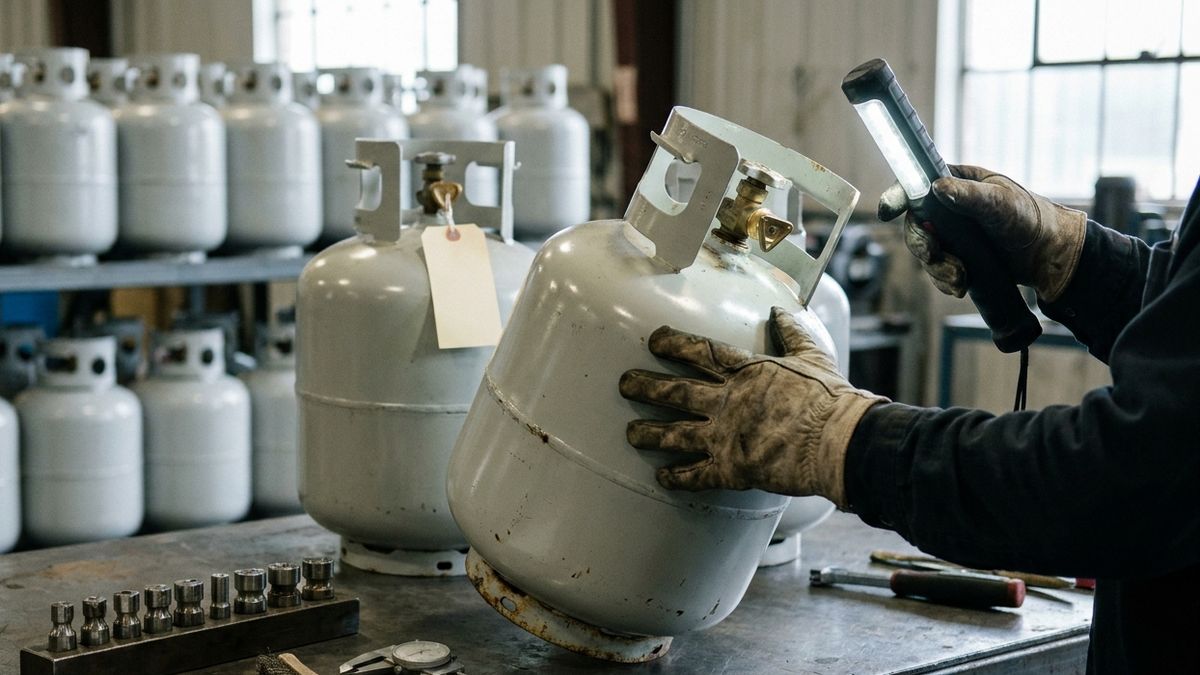
Most shops can stamp a cylinder. Fewer can hand you the inspection record behind a stamp from eight months ago in under a minute. That second thing is exactly what an insurer's adjuster or a plaintiff's attorney asks for, and it's where a routine claim turns into a contested one. A five-step requal habit, run identically by every tech, makes the record exist the moment the work happens instead of the day someone needs it.
The Situation
A cylinder that gets a fresh requalification stamp with no documented visual inspection behind it isn't requalified. It's a stamp with nothing under it. DOT's rule is plain: under 49 CFR 180.205 the visual inspection comes first, then the date. The gap most shops carry isn't a missing rule. It's a record nobody can find when an adjuster or a state inspector asks for it. Build one routine your whole crew runs the same way, and that gap closes.
The Facts
DOT cylinder requalification lives in 49 CFR 180.205, and the stamp is the last step in it, not the whole of it. Before an approved requalifier restamps a cylinder, they have to complete and pass a visual inspection of the shell, base, and valve for corrosion, dents, gouges, and leaks, and that requalification has to be recorded. NFPA 58 and OSHA 29 CFR 1910.110 govern how you store and handle the cylinder; neither replaces the DOT requal step. A cylinder wearing a fresh stamp with no inspection behind it is out of compliance the day it leaves the rack, even if it looks perfect.
The requal clock also isn't the same for every bottle. Under 49 CFR 180.209, the period turns on the cylinder type and method, running anywhere from 5 to 12 years (the 7-year option for 4-series cylinders arrived under the 89 FR 15667 amendment). Treat the whole yard as one window and eventually a bottle gets stamped on the wrong schedule.
What DOT will not bend on is retrievability. You can keep records on paper or digitally, your call, but a completed cylinder is worthless as a compliance record if nobody can find the inspection notes six months later. The shops that stay clean in an audit aren't the ones with the tidiest racks. They're the ones who can put their hands on the shell check, the date, the requalifier's mark, and the outcome while the inspector is still standing there.
Business Impact
One incomplete requal file rarely draws a fine by itself. It turns into a liability the day something goes wrong and an adjuster or an attorney asks for the record behind that stamp. Rebuilding a paper trail after the fact, or admitting it never existed, is what turns a routine claim into a contested one.
What that means for your shop: 1. A requalification with no documented visual inspection is a gap that sits quiet until an incident drags it into daylight. 2. Retrievable records are becoming an underwriting question, not a nicety. Expect your carrier to ask how fast you can produce one. 3. An approved requalifier who can't put a clean file on the desk in minutes invites a slower, more skeptical look at everything else on the shelf. 4. Build the routine into muscle memory before your next state inspection or insurance renewal finds the gap for you.
Key Data Points
- 49 CFR 180.205 governs specification-cylinder requalification and requires an approved requalifier plus a documented visual inspection before restamping.
- 49 CFR 180.209 sets requal periods by cylinder type and method (5, 7, 10, or 12 years); the 7-year option for 4-series cylinders came in under the 89 FR 15667 amendment.
- NFPA 58 (storage and handling) and OSHA 29 CFR 1910.110 (workplace) are separate from the DOT requal requirement and do not replace it.
- 'Requalification' is DOT's term; some shops say 'recert' for the same step. DOT rules govern it either way.
- DOT permits paper or electronic requal records; the compliance test is retrievability, not format.
Key Takeaways
- A requal stamp only means something if a documented visual inspection sits behind it — the mark is proof the work happened, not a substitute for it.
- Requal intervals vary by cylinder type and method (5, 7, 10, or 12 years under 49 CFR 180.209); running the whole yard on one window eventually stamps a bottle on the wrong schedule.
- DOT accepts paper or digital records — what it will not accept is "I can't find it." Retrievability, not format, is the compliance test.
- In an audit, the shops that walk out clean are the ones who can produce the shell check, date, requalifier mark, and outcome in under a minute.
Action Steps
- 1.Pull five random cylinder files from last quarter and check that each has a documented visual inspection tied to the stamp, not just a logged date.
- 2.Confirm every cylinder type in your yard is on the correct requal period under 49 CFR 180.209. Don't assume one window covers all of them.
- 3.Standardize a five-step requal routine (verify the date against the stamp, inspect shell/base/valve, check for leaks, record the result, file it where anyone can pull it) and post it at every workstation.
- 4.Run a mock audit this month: hand a random file to someone outside your safety team and time how long it takes them to find the inspection record.
Competitive Advantage
An approved requalifier who can hand over a complete file in under a minute turns a surprise audit into a non-event while the shop across town is still digging through a filing cabinet. The difference is when the record gets made: captured the moment the inspection happens, not reconstructed the week an adjuster asks. Start this week by timing how long it takes to produce one old file, then fix whatever made it slow.
If an inspector asked for your last five requalification records right now, how long would it take you to put them on the desk?
Get the next one in your inbox.
Free propane industry news, twice a week. 30,000+ operators already read it.
No spam, unsubscribe anytime. We'll email you a link to confirm — that's how we keep the list real. Cloudflare processes a short bot-check token on this form. See our privacy policy.
Published by PropaneInsider.com
AI-powered propane industry news for 30,000+ professionals
Propane Insider is published by the makers of Tank Spotter, Custom Fuel App, Blink Fuel, PIMS and Propane Safety Pro; some links go to advertisers.